What the 5.7 kHz bandwidth means for your measurement
The AD22151YRZ-RL is a single-axis Hall effect sensor that outputs an analog voltage proportional to the perpendicular magnetic field. Its 5.7 kHz bandwidth sets the upper frequency of detectable field changes — above that, the output amplitude rolls off. For a rotating magnetic target (e.g., a gear tooth or encoder wheel), this bandwidth supports shaft speeds well into the tens of thousands of RPM depending on pole count. The analog output is ratiometric to the supply: at 5 V supply, the quiescent output sits at 2.5 V (50% of Vcc), and the sensitivity scales with Vcc. This means the ADC reference and sensor supply should track each other to avoid ratiometric error — a common gotcha when the sensor runs from a separate 5 V rail than the ADC reference.
Temperature range and compensation — why it matters for your board
Rated -40°C to 150°C operating ambient, this sensor spans the full automotive under-hood temperature envelope and industrial high-temp zones like engine bays, exhaust-side actuators, or hot-side process control. The temperature-compensated output reduces the drift of the null offset and sensitivity across that range — without it, a 150°C swing could shift the output enough to trip a threshold comparator at the cold end. The 15 mA max output drives most ADC inputs directly without a buffer — check the ADC's input impedance; if it's below 10 kΩ, the sensor's output may need a unity-gain follower to maintain linearity at the bandwidth limit.
Sourcing and compliance
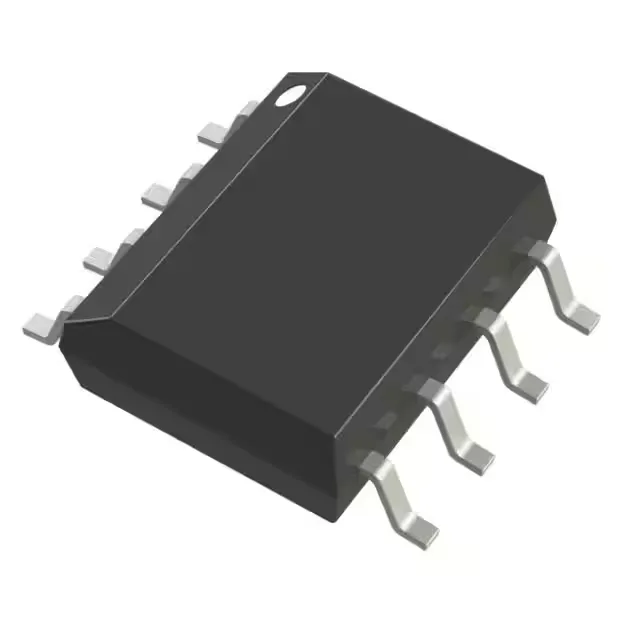
The footprint is the standard 8-SOIC, so a functional equivalent from another vendor would require a board spin unless the pinout and output characteristics match exactly — something to verify against the target application's signal chain before committing.