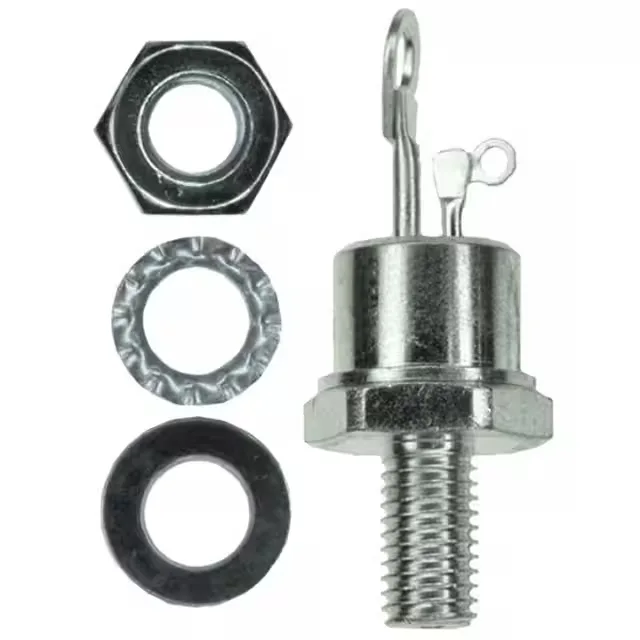
The Vishay VS-2N681 is a standard recovery silicon controlled rectifier (SCR) in a TO-208AA stud-mount package. It's a low-voltage device rated for 25 V off-state, with a healthy 25 A RMS on-state current capacity and a 16 A average rating. The stud mount means it bolts directly to a heatsink or chassis, which is the classic way to get the heat out in power control circuits — think DC motor drives, battery chargers, welding equipment, or any industrial power supply that needs a rugged, repairable thyristor.
25 V off-state — the spec that limits the application
The 25 V off-state voltage is the first thing to check. Most stud-mount SCRs in this current class are 400 V or 600 V parts. The VS-2N681 is strictly a low-voltage device — it blocks only 25 V when reverse-biased. That makes it a niche part for low-voltage DC circuits where you need high current switching but don't have high voltage. If your design sees more than 25 V peak, this part will fail. The 2 V on-state voltage drop at full current is typical for a standard recovery SCR of this size; you'll lose about 32 W at 16 A average, so the stud mount and a decent heatsink are mandatory.
Gate drive requirements
The gate needs 40 mA trigger current and 2 V to turn on reliably. That's a standard drive level — any common SCR driver IC or a simple transistor circuit can handle it. The 20 mA holding current means once triggered, the SCR stays latched as long as the load current stays above 20 mA. Below that, it will drop out of conduction. That's fine for most power circuits, but if you're switching a very light load, you might need a bleeder resistor to keep the current above the holding threshold.
Surge handling and off-state leakage
The non-repetitive surge current rating of 145 A at 50 Hz and 150 A at 60 Hz tells you this SCR can handle a brief fault or inrush event without failing. That's about 6 times the RMS rating, which is typical for a standard recovery SCR. The off-state leakage is 6.5 mA max — not a concern in most power circuits, but worth noting if you're designing a battery-powered system where every milliamp of standby current matters.
It's also RoHS3 compliant. That's a relief for anyone who's been burned by a discontinued stud-mount SCR that had no direct drop-in replacement.