Surge protection window — the three voltages that matter
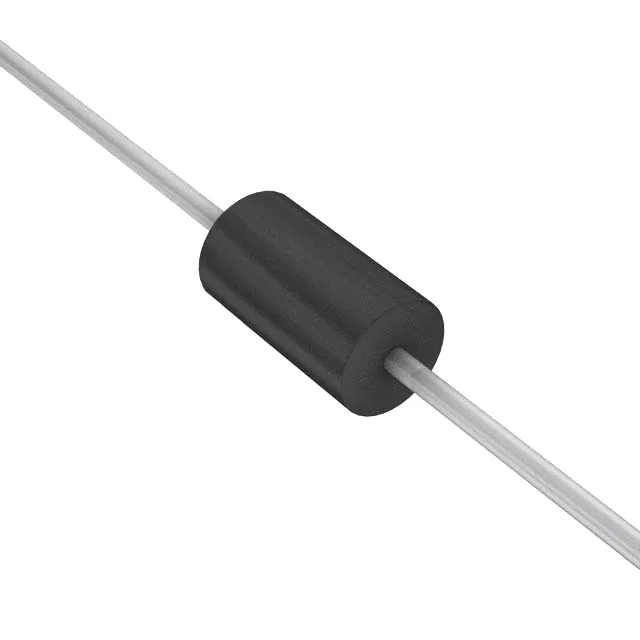
The 1.5KE39CA-E3/54: Its protection envelope is defined by three thresholds: 33.3V reverse standoff (the maximum DC or AC peak voltage the line can carry without the diode conducting), 37.1V minimum breakdown (where clamping begins), and 53.9V maximum clamping at the rated 27.8A peak pulse current. The 33.3V standoff means this part suits 24V nominal rails with tolerance — a 24V supply that sees 28V during normal regulation still stays below the conduction threshold. When a transient hits, the diode clamps at 53.9V maximum, protecting downstream semiconductors rated for 60V or higher.
Bidirectional — one part covers both polarities
A single bidirectional channel handles positive and negative transients symmetrically, so one device replaces two unidirectional diodes in back-to-back configuration. This saves board area and reduces component count on AC lines or bipolar DC rails where the surge polarity is unknown. The DO-201AA (DO-27) axial leaded package is a through-hole format with a robust lead diameter that handles the 27.8A pulse current without fusing the wire. The junction operates from -55°C to 175°C, giving margin in high-ambient enclosures where the self-heating from repetitive surges accumulates.
Active lifecycle — no end-of-life pressure on the BOM
The TransZorb series is Vishay's established TVS family with decades of field data. The 1.5KE prefix covers the 1500W power class; the 39CA suffix denotes the 33.3V standoff bidirectional variant in the standard DO-201AA package.