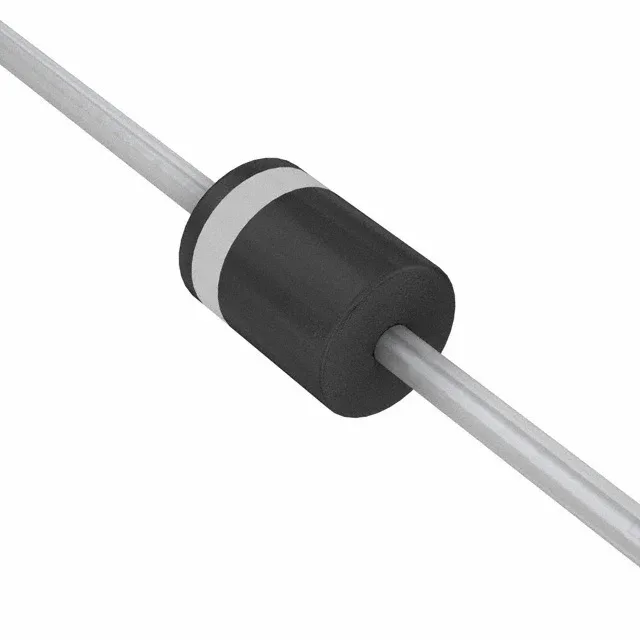
Standoff, breakdown, clamping — the three TVS numbers that define the protection window
The 5KP17AHE3/54: The reverse standoff of 17 V sets the working voltage above which the device begins to conduct — transients that push a 12 V automotive rail above 17 V hit the avalanche region and get clamped. The part survives a single high-energy transient and returns to blocking once the event clears; it is not a continuous-power device.
Automotive-qualified for the vehicle electrical environment
AEC-Q101 qualification means the device has passed the automotive stress-sequence: sustained high-temperature operating life, temperature cycling, and humidity-biased acceleration. With a junction temperature rating of 175 °C, there is thermal margin against the under-hood profiles that would degrade a commercial-grade TVS. Unidirectional only — one polarity clamps, the other blocks like a normal reverse-biased Zener. For 12 V automotive lines this covers the load-dump transient that drives the supply above rail; a bidirectional device is not needed here.