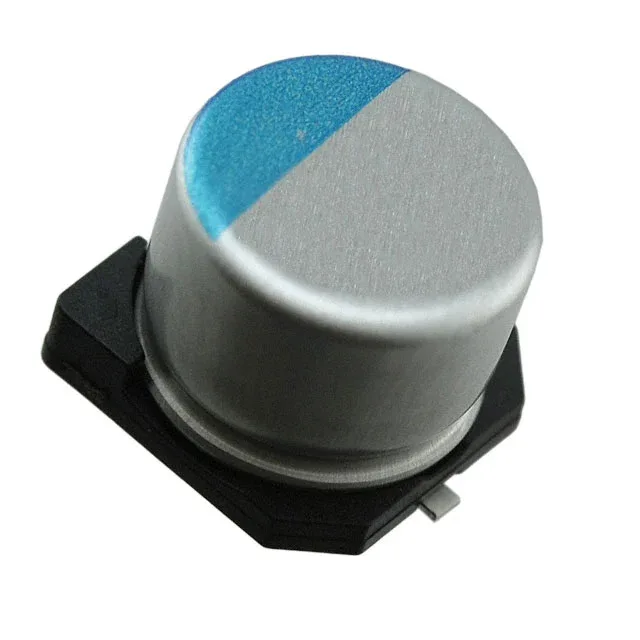
Why the ESR and ripple current matter for this part
The APXG250ARA221MJA0G: Polymer electrolytic construction delivers an ESR of 20 mΩ — roughly an order of magnitude lower than a comparable wet electrolytic at the same capacitance and voltage. That low ESR translates directly to lower losses in input and output filter applications, which is why this type is specified in point-of-load regulators, graphics cards, and server power stages where switching frequencies sit in the 100–500 kHz range. The ripple current rating of 3.8 A at 100 kHz is the figure to derate against for thermal headroom. At 105 °C ambient the part is rated for 15,000 hours — a typical derating rule of thumb holds the ripple-generated self-heating below 5 °C rise to stay inside that lifetime envelope, so a 70–80 % loading of the ripple spec is a practical sizing target in power-converter designs.
Thermal endurance and the -55 °C cold start
The -55 °C lower operating limit means the part survives cold-start transients in automotive and outdoor infrastructure equipment without the high-ESR penalty that catches wet electrolytics at sub-zero temperatures. The 105 °C upper limit is driven by the polymer electrolyte's thermal budget at the can — not the ambient, but the junction-equivalent at the winding, so thermal relief in the layout (copper pad under the can, thermal via stitching) extends useful life in confined enclosures.
SMD radial can footprint for board layout
The 10.00 mm body diameter and 10.30 mm seated height fit the standard 8–10 mm polymer SMD footprint. The land pattern of 10.30 mm × 10.30 mm sets the pad geometry for reflow — the can-to-pad clearance must respect the solder-mask dam between the positive tab and the cathode sleeve to prevent bridging on fine-pitch layouts.