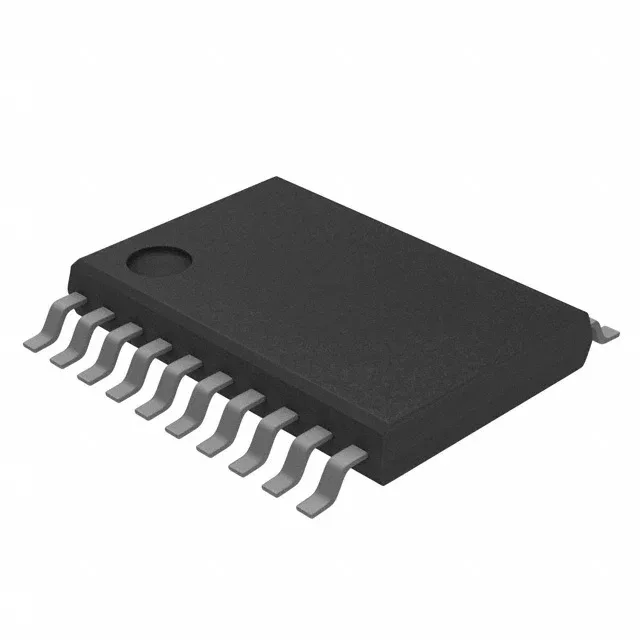
Toshiba Semiconductor 74VHC273FT — Discrete Semiconductors

Toshiba 74VHC273FT D-Type Flip-Flop, 110 MHz, 20-TSSOP

MPN74VHC273FT
End of Life

Toshiba Semiconductor 74VHC series D-Type flip-flop, 74VHC273FT, 8-bit, positive-edge triggered, master reset, non-inverted output, 110 MHz, 2V-5.5V, 20-TSSOPB, tape and reel.

$0.5Ref. price · indicative, final on quote
Packaging20-TSSOP (0.173", 4.40mm Width)
RoHSROHS3 Compliant
Series74VHC
Independent supplier — new & surplus stockAuthenticity-screened · ESD-safe packingListing updated Aug 2026

Specifications

74VHC273FT specifications
ParameterValue
TypeD-Type
Series74VHC
Output typeNon-Inverted
Trigger typePositive Edge
MountingSurface Mount
Supply voltage2V ~ 5.5V
Current - quiescent4 µA
Current - output high, low8mA, 8mA
Clock frequency110 MHz
Operating temperature-40°C ~ 85°C (TA)
PackageTape & Reel (TR); Cut Tape (CT)
FunctionMaster Reset
Case20-TSSOP (0.173\", 4.40mm Width)
Input capacitance4 pF
Number of elements1
Number of bits per element8
Max propagation delay @ v, max CL11ns @ 5V, 50pF

Product details

20-TSSOPB footprint and board integration

The 74VHC273FT: No exposed thermal pad means the land pattern follows the JEDEC MO-153 variation; keep the trace width under the body at 0.25 mm max to avoid solder bridging during reflow. The 4 µA quiescent current means it won't drain a battery-backed domain. The 8 mA output drive (source and sink) handles standard CMOS fan-out of 10-15 loads per output.

Active production and compliance posture

The tape-and-reel packaging is standard for automated pick-and-place — no special handling beyond the usual MSL bake check before reflow.

Frequently asked questions

What is the closest functional second-source to the 74VHC273FT?

The 74VHC9273FT is the nearest peer — same D-type flip-flop function, master reset, non-inverted output, and 20-TSSOPB package. The 74VHC9273FT runs at 100 MHz (vs 110 MHz) with a 12.1 ns propagation delay at 5 V (vs 11 ns), but extends the temperature range to -40°C to 125°C. It drops into the same PCB footprint without a board spin.