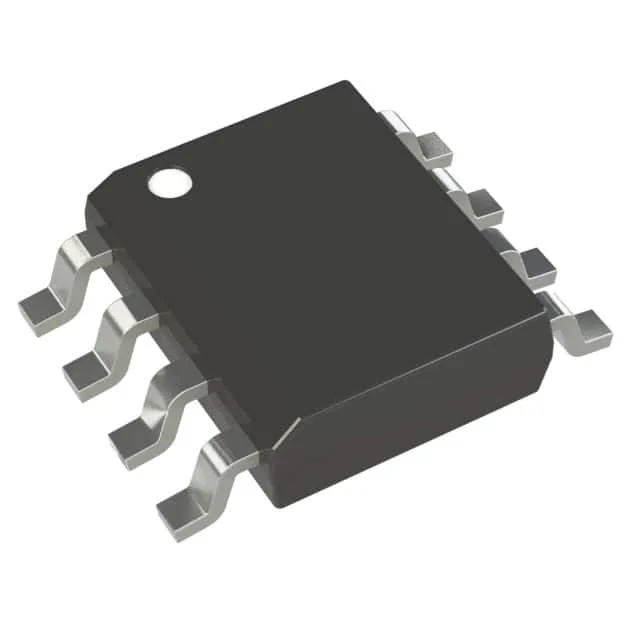
Microchip Technology 93AA66AT-I/SN — Discrete Semiconductors

Microchip 93AA66AT-I/SN EEPROM, 4Kbit Microwire, 2 MHz

MPN93AA66AT-I/SN
End of Life

Microchip Technology 93AA66AT-I/SN EEPROM, 4Kbit (512 x 8), Microwire interface, 2 MHz clock, 1.8V to 5.5V supply, -40°C to +85°C, 8-SOIC, Tape & Reel.

$0.35Ref. price · indicative, final on quote
Packaging8-SOIC (0.154", 3.90mm Width)
RoHSROHS3 Compliant
Independent supplier — new & surplus stockAuthenticity-screened · ESD-safe packingListing updated Aug 2026

Specifications

93AA66AT-I/SN specifications
ParameterValue
Memory typeNon-Volatile
MountingSurface Mount
Supply voltage1.8V ~ 5.5V
Clock frequency2 MHz
Memory interfaceMicrowire
Operating temperature-40°C ~ 85°C (TA)
PackageTape & Reel (TR); Cut Tape (CT)
TechnologyEEPROM
Memory size4Kbit
Memory formatEEPROM
Case8-SOIC (0.154\", 3.90mm Width)
Memory organization512 x 8
Write cycle time - word, page6ms

Product details

4 Kbit Microwire at 2 MHz — the interface that decides the fit

The 93AA66AT-I/SN: The Microwire interface is a three-wire serial protocol (SI, SO, SK) with a dedicated chip-select — it is not I²C or SPI, so the MCU or ASIC on the other end must have a Microwire port or bit-bang the timing. The 2 MHz clock rate is fast enough for most parameter-storage and calibration-ID reads; the 6 ms write cycle (word or page) sets the floor for in-application updates.

The supply range covers 1.8 V low-voltage cores up to 5 V legacy logic without a separate regulator. At 1.8 V the internal charge pump still generates the write voltage, so the part operates across the full range without a performance derating — the 2 MHz clock holds at any supply voltage within the window.

ROHS3 compliance — no exemption risk

The part is ROHS3 compliant, meaning no restricted substances above the threshold limits and no time-limited exemptions that could trigger a supply discontinuity.

Frequently asked questions

Will 93AA66AT-I/SN drop in as a replacement for 24AA128T-I/SN?

No — the 24AA128T-I/SN is a 128 Kbit I²C EEPROM in the same SOIC-8 footprint, but the interface protocol is different. The 93AA66AT-I/SN uses Microwire, not I²C. The pinout is also different: Microwire uses dedicated SI/SO/SK pins, while I²C uses SDA/SCL. A board designed for the 24AA128T-I/SN would require a firmware and possibly a layout change to accept the 93AA66AT-I/SN.

What is the write cycle time for the 93AA66AT-I/SN?

The write cycle time — word or page — is 6 ms typical. This is the time the internal charge pump and programming logic take to write the data to the memory array. The part does not accept new commands during this window; the host must poll the READY/BUSY status or wait the full 6 ms before the next operation.