Still in active production — what that means for a legacy BOM
Texas Instruments lists the TMS27C291-3JL as Active, so it remains a supported production part for existing designs that require a 16 Kbit UV-erasable EPROM in a 24-pin DIP.
35 ns access time — the speed that sets the CPU wait-state budget
A CPU or DSP that clocks above ~28 MHz typically inserts one or more wait states to meet this timing — the exact count depends on the memory controller's setup and hold margins. Organised as 2K x 8 bits (16 Kbit total), the parallel interface presents a byte-wide data bus with standard address lines, making it a direct drop-in for 8-bit microcontroller or ASIC memory maps that expect a 24-pin DIP EPROM.
Windowed 24-DIP — the UV-erasable reality
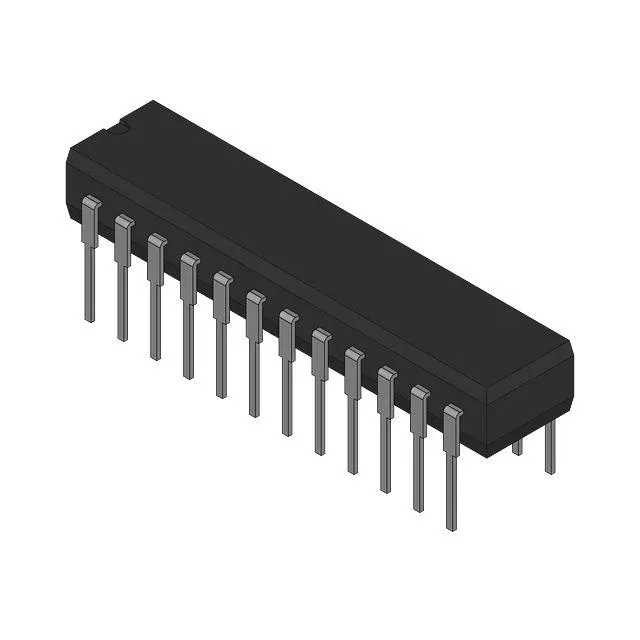
The 24-DIP (0.600-inch, 15.24 mm) windowed package lets UV light reach the die for erasure. This is the classic EPROM form factor — the quartz window requires an opaque label in-system to prevent data corruption from ambient light, and reprogramming needs a UV eraser unit, not in-circuit programming. The Bulk packaging means the parts ship in tubes or trays, not tape-and-reel — expected for a through-hole DIP that runs through wave solder or hand-solder stations, not reflow.
RoHS non-compliant — legacy tin-lead finish
Texas Instruments lists the TMS27C291-3JL as RoHS non-compliant, confirming a tin-lead (SnPb) solder finish on the leads. This is the expected plating for an EPROM from this era — it mates with standard SnPb wave-solder profiles and is exempt from RoHS restrictions in military, aerospace, and certain medical applications where leaded solder is still permitted.