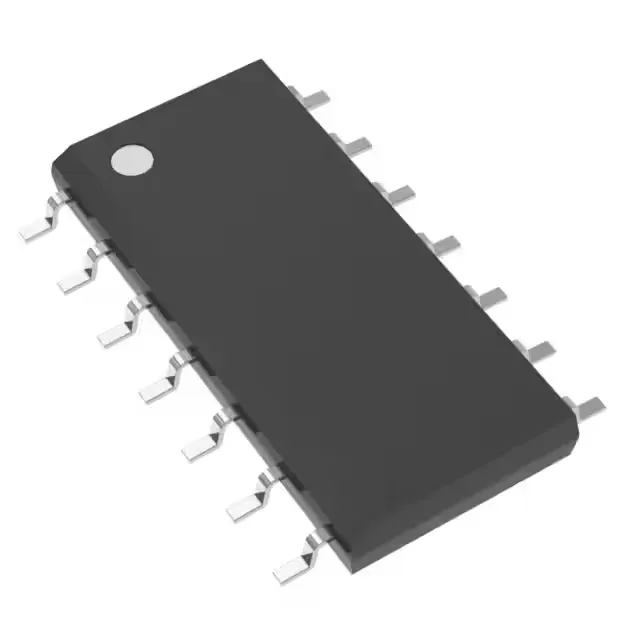
Texas Instruments SN74ALS03BD — Logic ICs

SN74ALS03BD TI 74ALS Quad 2-Input NAND Gate, Open Collector

MPNSN74ALS03BD
End of Life

Texas Instruments 74ALS series, SN74ALS03BD, Logic NAND Gate, Open Collector, 4 Circuit, 2 Input, 8 mA, 4.5V to 5.5V, 14-SOIC, 0°C to 70°C.

$0.94Ref. price · indicative, final on quote
Packaging14-SOIC (0.154", 3.90mm Width)
RoHSROHS3 Compliant
Series74ALS
Independent supplier — new & surplus stockAuthenticity-screened · ESD-safe packingListing updated Aug 2026

Specifications

SN74ALS03BD specifications
ParameterValue
Series74ALS
Logic typeNAND Gate
MountingSurface Mount
Voltage4.5V ~ 5.5V
Current - output high, low-, 8mA
I/O channels2
Operating temperature0°C ~ 70°C
PackageTube
FeaturesOpen Collector
Case14-SOIC (0.154\", 3.90mm Width)
Number of circuits4
Input logic level - low0.8V
Input logic level - high2V
Max propagation delay @ v, max CL50ns @ 5V, 50pF

Product details

It packs four independent gates into a 14-SOIC surface-mount package, each gate accepting two inputs and driving a common open-collector node. The open-collector output is the key differentiator here — it lets you wire multiple gate outputs together to implement wired-OR logic, or shift the output voltage to a different rail by pulling up to a separate supply. Typical applications include bus-interface logic, level translation, and driving loads like LEDs or relays where a totem-pole output would conflict. The 74ALS family balances speed and power, making this a workhorse for 5 V industrial and commercial logic designs operating from 0°C to 70°C.

The SN74ALS03BD is rated for 8 mA sink on each output (low level). The 50 ns propagation delay at 5 V and 50 pF load is typical for the 74ALS family.

Frequently asked questions

Is SN74ALS03BD a direct replacement for SN7403?

The SN74ALS03BD is a higher-speed, lower-power 74ALS version of the classic 7403 quad 2-input NAND gate with open-collector outputs. It is pin-compatible and functionally identical, but the ALS family offers faster propagation delay and lower power consumption. It is a drop-in replacement in most designs that can tolerate the faster edge rates.