50 ns access, 15 MHz data rate — FIFO timing for asynchronous buses
The Texas Instruments SN74ACT7202LA50RJ is an asynchronous FIFO memory organized 1K x 9 bits (9K total). That 15 MHz ceiling is the practical limit for back-to-back transfers; the 50 ns access is the time from read-enable assertion to valid data on the outputs, which matters when the receiving logic has its own setup-time requirement. The 9-bit width (8 data + 1 parity/control) suits byte-wide data paths with an extra flag or error bit.
Depth expansion and retransmit — buffer flexibility
This FIFO supports depth and width expansion, so multiple devices can cascade to build larger buffers without external logic. The retransmit capability lets the host re-read data from the start of the FIFO without a full reset — useful in retry-on-error protocols. No FWFT (First-Word Fall-Through) support means the first word does not appear on the outputs until the first read cycle completes; the designer needs to account for that initial read pulse in the handshake. Programmable flags are not available, so the half-full and full/empty flags are fixed-function pins.
32-PLCC package — footprint and reflow
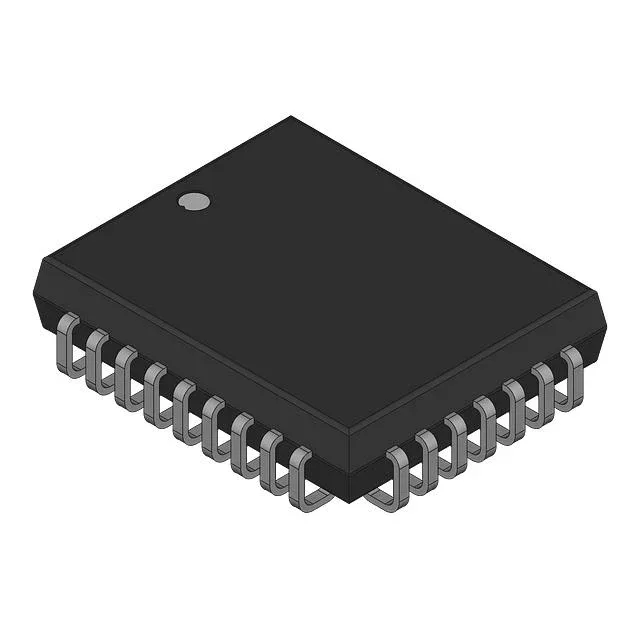
The SN74ACT7202LA50RJ comes in a 32-lead PLCC (J-lead) package, supplier device package 32-PLCC. Surface-mount, J-lead form factor requires a standard PLCC land pattern — the J-bend leads give good coplanarity but need a solder-paste stencil aperture sized for the lead width. Maximum supply current is 80 mA — a modest draw for a 5 V FIFO, but the PLCC package has no thermal pad, so forced airflow helps if the ambient runs near 70°C.
The 32-PLCC package is a mature footprint, so supply should remain stable as long as TI continues to run the ACT7202 family.