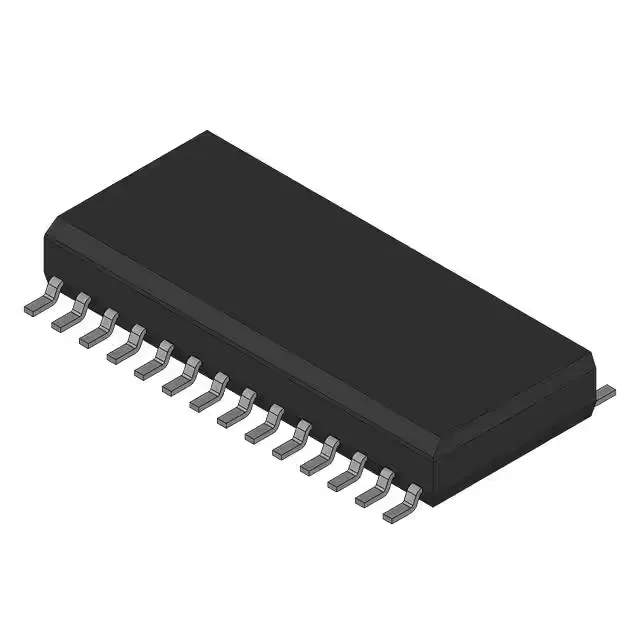
Asynchronous FIFO in a 28-SOIC footprint
The Texas Instruments SN74ACT7200L20DV is a 256 x 9 asynchronous FIFO memory in a 28-SOIC surface-mount package.
256 x 9 buffer — what the depth and width buy you
The 256-word depth at 9 bits wide (2.25 Kbit total) is sized for moderate packet or status-word buffering. The extra ninth bit is often used for parity or a control flag, which saves an external register in designs that need error detection or a data/command tag alongside each word. Asynchronous operation means the read and write clocks are independent — no external clock synchronisation is required. This simplifies the board layout and firmware, but the trade-off is that the maximum data rate is limited by the internal arbitration and the access time, not by a synchronous clock edge. For bursty data at moderate rates (sub-20 MHz typical for this family), it is a reliable, low-latency choice.
Retransmit capability and expansion options
The SN74ACT7200L20DV supports retransmit, which lets the FIFO reset its read pointer to the beginning of the stored data without a full clear — useful for retry protocols or re-reading a data block. It also supports depth and width expansion, so multiple devices can be cascaded to build larger buffer arrays while keeping a single unified interface.