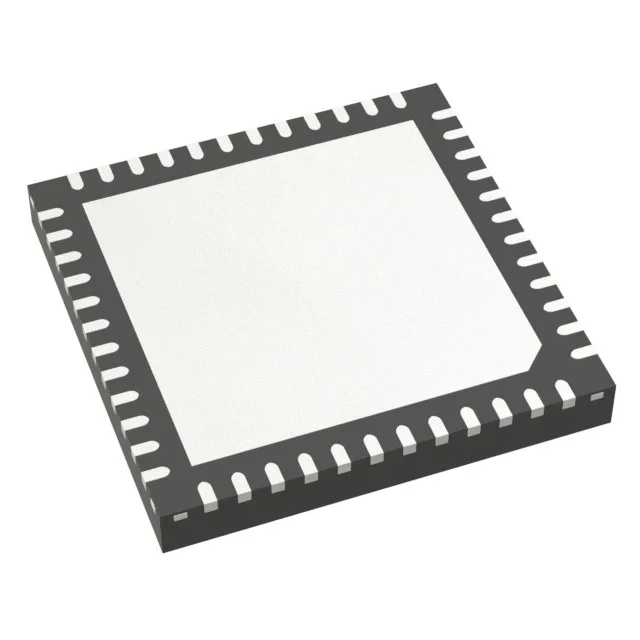
The STM32L031C6U6: For a BOM that needs this exact order code, there is no rush to stockpile or find a replacement.
What the 32 MHz Cortex-M0+ core means in practice
The ARM Cortex-M0+ core runs at 32 MHz — that is the instruction-fetch ceiling set by the flash wait-state profile, not a marketing number. 32-bit single-core architecture means it processes 32-bit data in one cycle — a 16-bit timer compare or a 32-bit accumulator update does not need multiple load-shift-store operations.
On-chip memory budget — 32 KB flash, 8 KB RAM, 1 KB EEPROM
32 KB of flash (32K x 8) holds the firmware image. After the HAL and a lightweight RTOS like FreeRTOS, expect roughly 20-24 KB left for the application — enough for a Modbus slave, a PID loop, or a simple data-logger state machine. 8 KB of SRAM (8K x 8) covers the stack and heap. A 1 KB EEPROM block (1K x 8) stores calibration constants or last-known-good parameters without wearing the flash — useful for a field device that needs to survive power loss mid-write.
Supply range and power — runs on a single Li-ion cell
Industrial temperature grade (-40°C to 85°C) covers outdoor enclosures, engine bays, and unheated warehouses.
Peripherals and I/O — 38 GPIOs in a 48-pin package
38 GPIOs out of 48 pins is a high pin-to-package ratio — most of the pins are usable as digital I/O, not eaten by power or ground. A 10-channel 12-bit ADC reads up to ten analog signals without an external multiplexer — enough for a three-phase current-sense plus a thermistor and a potentiometer on one chip.
Package and board-fit — 48-UFQFN with exposed pad
Surface-mount 48-UFQFN Exposed Pad, 7x7 mm body. Supplied in a tray — not tape-and-reel. For a kitting lead or a rework tech, that means the parts arrive in a rigid carrier, not a reel; plan for manual pick-and-place or a tray feeder on the line.