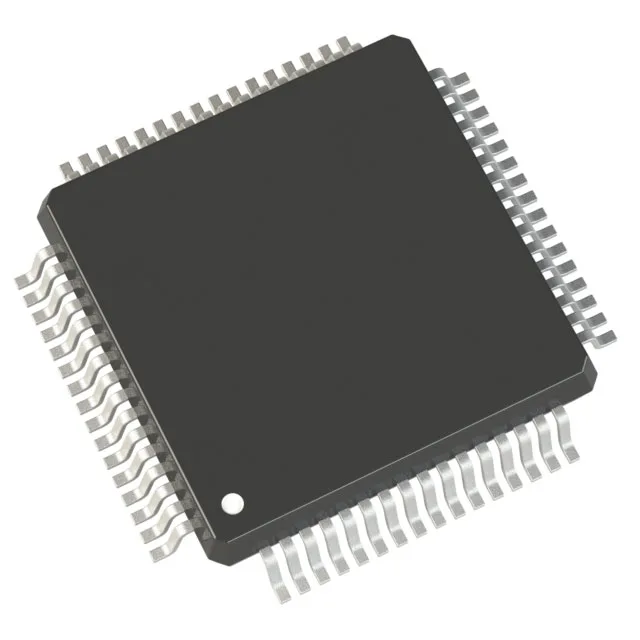
STMicroelectronics STM32L010R8T6 — Microcontrollers & Processors (MCU / MPU / DSP)

STM32L010R8T6 STMicroelectronics MCU, ARM Cortex-M0+, 32MHz

MPNSTM32L010R8T6
Active

STMicroelectronics STM32L010R8T6, 32-bit ARM Cortex-M0+ MCU, 32MHz, 64KB Flash, 8KB RAM, 256-byte EEPROM, 51 I/O, 16x12-bit ADC, I²C/SPI/UART/IrDA, 1.8V-3.6V, -40°C to 85°C, 64-LQFP.

$2.9400Ref. price · indicative, final on quote
Packaging64-LQFP
RoHSROHS3 Compliant
SeriesSTM32L0
Independent supplier — new & surplus stockAuthenticity-screened · ESD-safe packingListing updated Aug 2026

Specifications

STM32L010R8T6 specifications
ParameterValue
SeriesSTM32L0
MountingSurface Mount
Oscillator typeInternal
Program memory typeFLASH
Voltage - supply (Vcc (Vdd))1.8V ~ 3.6V
Operating temperature-40°C ~ 85°C (TA)
Speed32MHz
PackageTray
RAM size8K x 8
Core size32-Bit Single-Core
EEPROM size256 x 8
PeripheralsBrown-out Detect/Reset, DMA, POR, PWM, WDT
ConnectivityI²C, IrDA, SPI, UART/USART
Number of i (O)51
Core processorARM® Cortex®-M0+
Case64-LQFP
Data convertersA/D 16x12b
Program memory size64KB (64K x 8)

Product details

The STMicroelectronics STM32L010R8T6 is a 32-bit microcontroller built around the ARM Cortex-M0+ core, clocked at 32 MHz.

The 32 MHz Cortex-M0+ core delivers enough throughput for real-time sensor polling and control loops while drawing significantly less current than a Cortex-M3 at the same frequency — a deliberate trade-off for extended battery life. The 16-channel 12-bit ADC covers multi-sensor analog inputs without an external mux, saving board space and cost. With 51 I/Os available in the 64-LQFP package, you have enough pins for a parallel LCD, keypad matrix, and several serial peripherals simultaneously.

Frequently asked questions

What is the difference between STM32L010R8T6 and STM32L151CBU6A?

The STM32L151CBU6A uses a Cortex-M3 core (vs M0+), adds USB connectivity and a 2-channel 12-bit DAC, but has only 37 I/Os (vs 51) and comes in a UFBGA package instead of 64-LQFP. The M0+ core in the STM32L010R8T6 draws less current, making it better suited for battery-powered designs; the M3 variant offers higher performance and USB for applications that need it.