32 MHz Cortex-M0+ with 64 KB Flash — the entry-level ultra-low-power MCU for cost-constrained sensor nodes
It is designed for battery-powered and energy-harvesting applications — think wireless sensor endpoints, IoT edge nodes, portable medical monitors, and simple industrial control panels — where every microamp of sleep current and every cent of BOM cost matters.
Memory sizing: 64 KB Flash, 8 KB SRAM, 256 B EEPROM — what fits and what doesn't
The 64 KB Flash is the entry-level density in the STM32L0 value line. For a typical BLE beacon firmware with a lightweight RTOS, a Bluetooth stack, and a few sensor drivers, you'll use about 40–50 KB, leaving headroom for OTA update staging if you implement it. The 8 KB SRAM is tight — a 4 KB buffer for a UART DMA stream plus a 2 KB stack leaves 2 KB for application variables. If your design needs a large display frame buffer or a TCP/IP stack, this part will hit the SRAM ceiling. The 256 bytes of true EEPROM (separate from the Flash) is useful for storing calibration constants, device IDs, and configuration parameters without wearing the Flash — it's a genuine advantage over MCUs that emulate EEPROM in Flash sectors.
For a production BOM line, this means you can commit without contingency for a forced redesign — but as with any sole-source MCU, it is prudent to qualify a second-source alternate early if your volume justifies the engineering cost. The STM32L151CBU6A (Cortex-M3, also 32 MHz, with USB and a wider peripheral set) is sometimes cross-shopped but is not pin-compatible — the LQFP-32 footprint and pinout differ, so a board spin would be required.
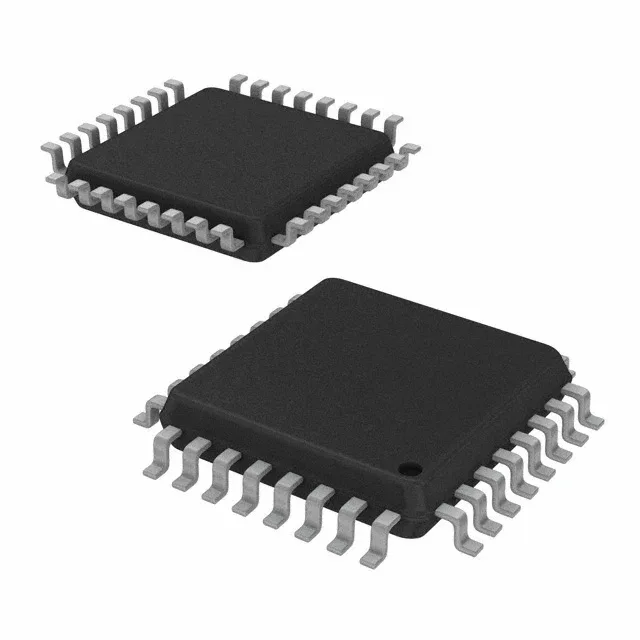
The 32-LQFP package (7x7 mm body, 0.8 mm pitch) is a common, hand-solderable footprint with good thermal characteristics for this power class — no exposed pad, so the PCB layout is straightforward.