6-channel LED controller for automotive lighting
The ROHM BD81A76EFV-ME2 is a 6-channel DC-DC controller IC for LED strings, built on the Automotive, AEC-Q100 platform. It handles step-down (buck) or step-up (boost) topologies, so it can drive series LEDs from a 4.5 V to 35 V supply rail — useful for headlamp, daytime-running-light, or interior-lighting clusters where the battery voltage sags and surges. Each of the six channels delivers up to 120 mA, and the output can go as high as 40 V. The switching frequency is programmable between 200 kHz and 2.2 MHz, letting you balance inductor size against switching losses — a 400 kHz design uses a larger coil but runs cooler; 2.2 MHz shrinks the magnetics for a tight PCB layout.
AEC-Q100 and the 125 °C ceiling
That matters for an under-hood or cabin-mounted LED driver that sees 105 °C ambient on a hot day; the 125 °C junction rating gives thermal margin when the LEDs themselves are dissipating heat into the same board. Production status is Active per the manufacturer, and the part is ROHS3 compliant.
Package and board-fit: 30-HTSSOP-B
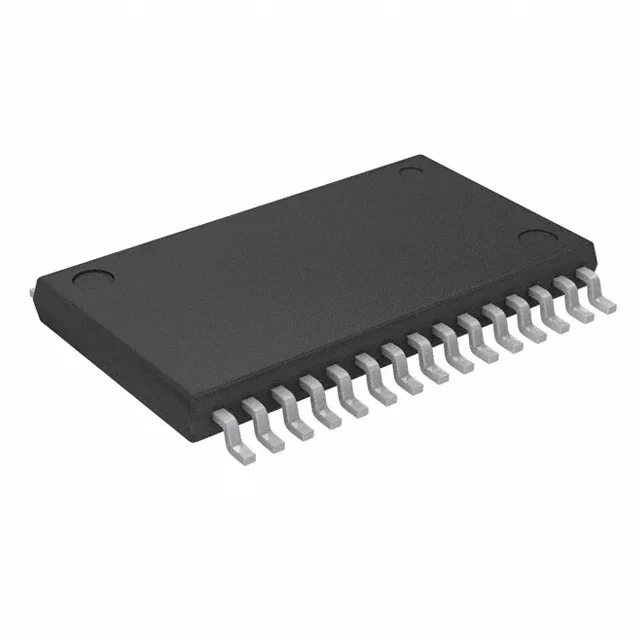
The 30-VSSOP package with exposed pad (0.22-inch body width, 5.60 mm) is a surface-mount part that needs a thermal land on the PCB to pull heat out of the pad. The supplier device package is designated 30-HTSSOP-B — the 'H' indicates the exposed pad version. On a rework bench, this is doable with hot air and a fine tip; the pad is large enough to hand-solder if you have a stencil and paste. No internal switches — this is a controller that drives external MOSFETs. That gives flexibility in choosing FETs sized for the actual LED string current (120 mA per channel is modest; you can oversize the FET for lower Rds(on) if the thermal budget allows).