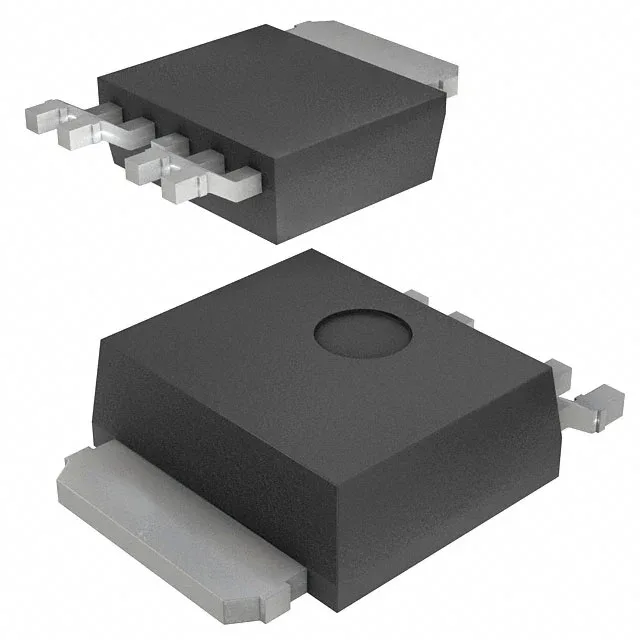
7V rail at 1A — the output stage and what it means for the load
The BA70BC0WFP-E2: The BA70BC0WFP- is a single-output positive linear regulator from ROHM Semiconductor, delivering a fixed 7V rail at up to 1A continuous. The 7V fixed output suits intermediate bus rails or analog supply lines that need a clean, regulated voltage from a higher input — the maximum input is 16V, so a 12V or 9V rail steps down cleanly with the 200mV typical dropout margin at full load. The quiescent current is 0.5 mA typical, with a maximum supply current of 900 µA — the regulator's own draw stays under 1 mA even at no load, which matters for always-on circuits where the LDO sits on the main power bus and the standby budget is tight.
Power supply rejection ratio is 55 dB at 120 Hz — this is the frequency of full-wave-rectified mains ripple (100/120 Hz), so the regulator attenuates the bulk-capacitor ripple from a bridge rectifier by a factor of roughly 560×. For a 100 mVpp ripple on the input, the output sees under 180 µVpp at that frequency, which keeps the 7V rail clean for sensitive analog front-ends or sensor bias circuits. The PSRR figure is specified at 120 Hz only — the rejection rolls off above that frequency as the control loop gain drops. Upstream filtering ahead of the LDO is still needed for switching noise above a few kilohertz.
Overcurrent protection limits the output current during a fault or short circuit. The combination of overcurrent and overtemperature shutdown means the regulator survives a sustained output short without external foldback circuitry, though the thermal cycling under repeated faults should be evaluated in the system thermal model.
TO-252-5 DPak — surface-mount power package with thermal tab
The Enable control pin allows the regulator to be shut down by a logic signal — pulling the pin low drops the output and reduces the quiescent current to near zero, which is useful for sequenced power-up or low-power sleep modes.
No pin-compatible second-source or official successor is listed on this record.