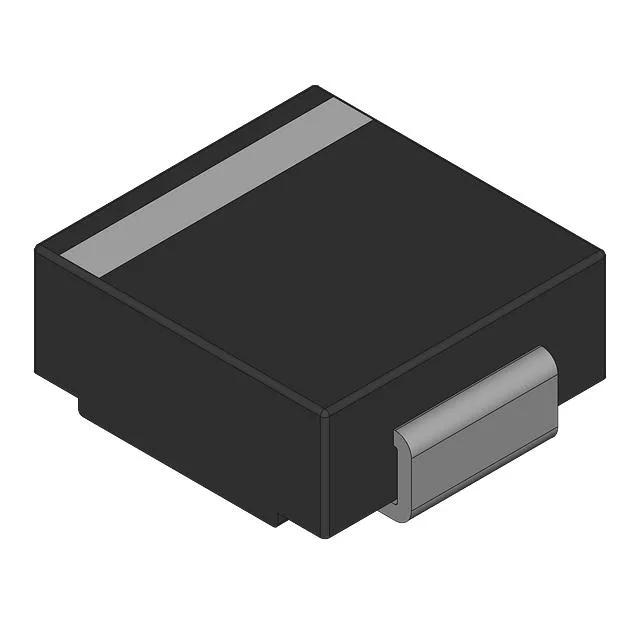
What a 1.5SMCJ TVS does in your circuit
The 1.5SMCJ110CA_R1_00001 is a bidirectional Zener-based transient voltage suppressor — it sits on a supply rail and stays invisible until a voltage spike exceeds the breakdown threshold, at which point it clamps the event to a defined voltage and shunts the surge current away from downstream circuitry. The reverse standoff of 110 V defines the working voltage the diode ignores in normal operation; the minimum breakdown of 122 V is the trigger point; the clamping maximum of 177 V at a peak pulse current of 8.4 A is what the downstream circuit sees during the transient event.
The 1500 W peak pulse rating is measured at the standard 10/1000 µs waveform — a slow-rise, slow-decay surge typical of switching transients and inductive load dump. The 8.4 A peak pulse current at that waveform tells you the diode is sized for secondary-surge protection on 110 V nominal lines, not for primary lightning-surge columns where peak currents run far higher. If your target waveform is shorter (8/20 µs) the clamping voltage and effective peak current shift — check the V-I curve in the Panjit datasheet for the specific waveform in your application.
Junction temperature range and thermal margin
The thermal resistance from junction to ambient is package-dependent; the SMC (DO-214AB) body style shares the same footprint as the common SMA package but with a higher current rating, so the land pattern and thermal pad treatment follow standard SMC layout practice.