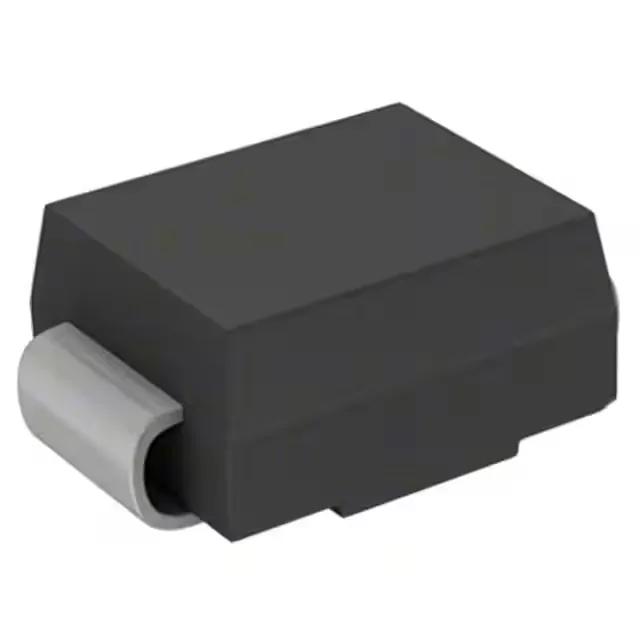
Peak pulse power and clamping performance
The 1.5SMCJ10AS_R1_00001: In practice, the clamping voltage of 17V max at 88.2A peak pulse current tells you what the protected rail sees during a transient: the diode clamps the spike to 17V and conducts 88.2A through the event before recovering. For a 10V rail, that 7V headroom above standoff covers most ESD and inductive kickback events without letting the spike reach the load.
Voltage stack and breakdown selection
The 10V reverse standoff is the working voltage the circuit sees in normal operation — the TVS stays off and draws only leakage current. The 11.1V minimum breakdown is where the device first begins to conduct; the 17V clamping ceiling is where it limits the transient at peak pulse current. Selecting a standoff below the rail's maximum working voltage keeps the TVS invisible in normal operation; the gap between standoff and breakdown gives the circuit designer margin against false triggering on supply ripple.
SMC package and temperature grade
The Tj rating of 150°C is the limiting constraint for thermal design: at elevated ambient the allowable transient energy derates accordingly. This is a single unidirectional channel — it handles positive transients on one polarity only. For AC rails or bipolar protection, a dual-directional or bidirectional part is required. The 1.5SMCJ10AS is not rated as power-line protection; it suits board-level protection on signal and power rails up to its clamping limits.