What the 1500W rating means for your rail
The 1.5KE39CA_R2_00001: For a 24 VDC industrial supply rail with transients from inductive loads or nearby lightning, the 33.3 V reverse standoff sits comfortably above the nominal bus, and the 53.9 V maximum clamping voltage at 28 A peak pulse current means the downstream DC-DC converter sees a hard voltage ceiling during a surge event. The 37.1 V minimum breakdown voltage is the avalanche turn-on threshold — it must exceed the maximum steady-state rail voltage plus tolerance. On a nominal 24 V bus with 10% regulation (26.4 V max), the 37.1 V knee gives over 10 V of headroom, so the TVS stays off during normal operation and only conducts when a real transient pushes the rail above the breakdown point.
Field-swappable package, no hot air required
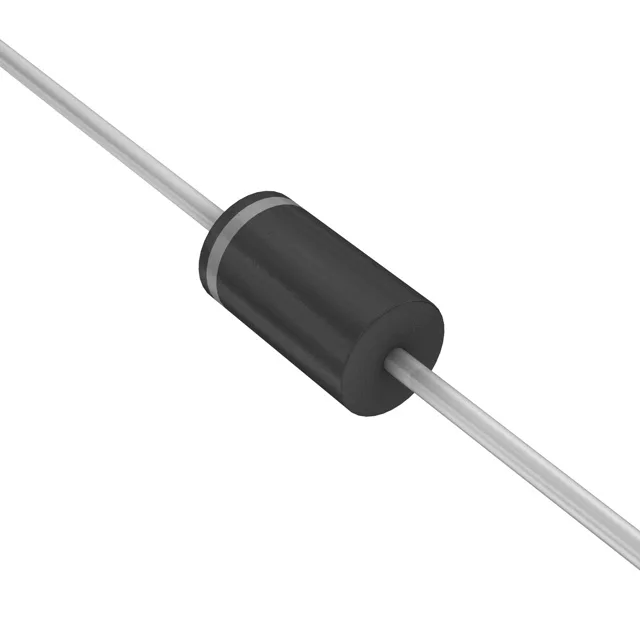
DO-201AE axial-lead through-hole package — the leads go through the board and solder on the opposite side. If a TVS fails short after a surge, you clip the leads, desolder the stubs, and drop in a replacement with a standard iron. No hot-air station, no reflow profile, no risk of lifting pads on a multi-layer board. That saves a diode drop and a PCB footprint compared to two unidirectional TVS diodes in anti-series. For a DC rail that sees reverse polarity or bipolar surges, the bidirectional construction is the cleaner fit.
Active lifecycle — no LTB clock ticking
The reel quantity suits high-volume lines; cut tape keeps the per-unit cost reasonable for a 50-piece BOM validation run.