S08 core at 50 MHz — throughput for sensor and control loops
The MC9S08QE64CLC runs the S08 core at 50 MHz, which sets the instruction throughput ceiling for time-critical loops like PID updates or comms packet parsing. At this clock rate, a single-cycle instruction executes in 20 ns — adequate for most 8-bit control tasks, but the bus bandwidth limits the number of high-frequency peripherals you can service without wait states.
64 KB flash and 4 KB RAM — memory budget for code and data
64 KB on-chip flash (64K x 8) stores the application firmware, leaving room for a modest bootloader and calibration tables. The 4 KB RAM (4K x 8) must hold stack, global variables, and any DMA or interrupt buffers — for a typical sensor node running a state machine with a 1 KB comms buffer, that leaves about 2 KB for the stack and heap. Plan the memory map early; a memory-intensive application will hit the RAM ceiling before the flash fills.
On-chip peripherals and connectivity
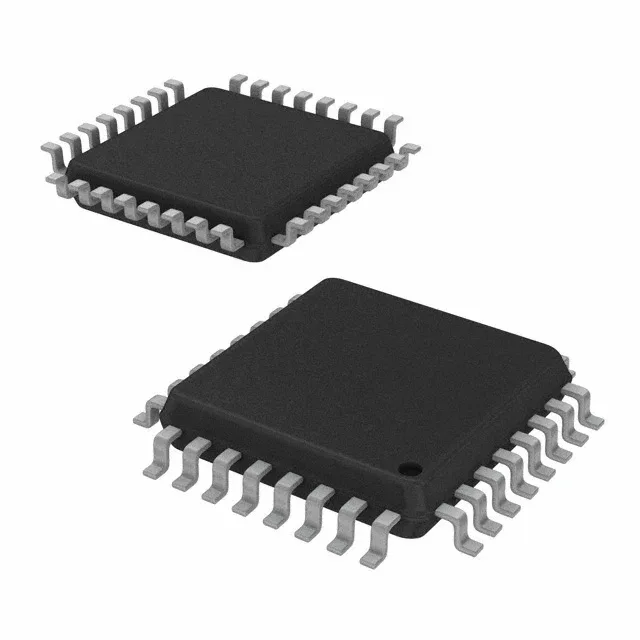
The MC9S08QE64CLC integrates a 10-channel 12-bit ADC for analog sensor inputs (temperature, pressure, current sense), plus LVD (low-voltage detect), PWM for motor or LED dimming, and a watchdog timer (WDT) for fail-safe reset. Connectivity covers I²C, LINbus, SCI (UART), and SPI — enough to talk to most common sensors, actuators, and serial displays without an external bridge chip. The 26 I/O pins in the 32-LQFP package must be allocated between these peripherals and general-purpose digital lines; a design using all four serial interfaces plus the ADC will consume about 18 pins, leaving 8 for GPIO.