PAL-type logic for legacy control boards
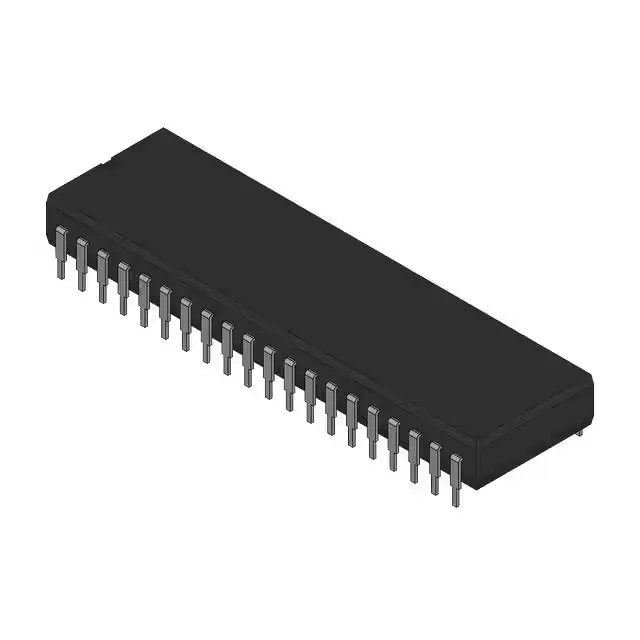
The Intel EP900PI is an EPLD (erasable programmable logic device) with a PAL-type architecture — 24 macrocells organized in a sum-of-products array that replaces multiple 7400-series TTL or 4000-series CMOS logic packages on a single 40-pin DIP.
55 ns propagation delay and the timing closure it sets
The 55 ns max propagation delay (tpd(1)) is the combinatorial path from any input through the AND-OR array to any output — it sets the ceiling on how fast the state machine can clock. For a 24-macrocell design running at 10-12 MHz, that is comfortable; push past 15 MHz and the timing margin vanishes unless the design is pipelined.
Industrial temperature grade and through-hole reliability
The 40-pin PDIP (0.600" row spacing) is a socket-friendly package: it survives thermal cycling in an unheated cabinet and can be replaced in the field without rework station access. The bulk packaging means it ships in tubes or trays, not tape-and-reel — expected for a through-hole DIP.
Active production — no last-time-buy pressure
Intel lists the EP900PI as active in its current product portfolio. The RoHS status is non-compliant (lead-bearing solder balls or die-attach), which is typical for legacy PLDs — a factor if your BOM requires full RoHS exemption documentation or if the assembly house flags it during incoming inspection.
EP900PI vs the commercial-temperature EP900PC-2
The closest functional second-source is the EP900PC-2 — same 24 macrocells, same 40-DIP footprint, same 5 V supply. If your board is in a conditioned room and you need the extra 10 ns of timing margin, the PC-2 is a pin-to-pin swap. For an unheated cabinet or outdoor enclosure, the PI's -40°C low end is non-negotiable.