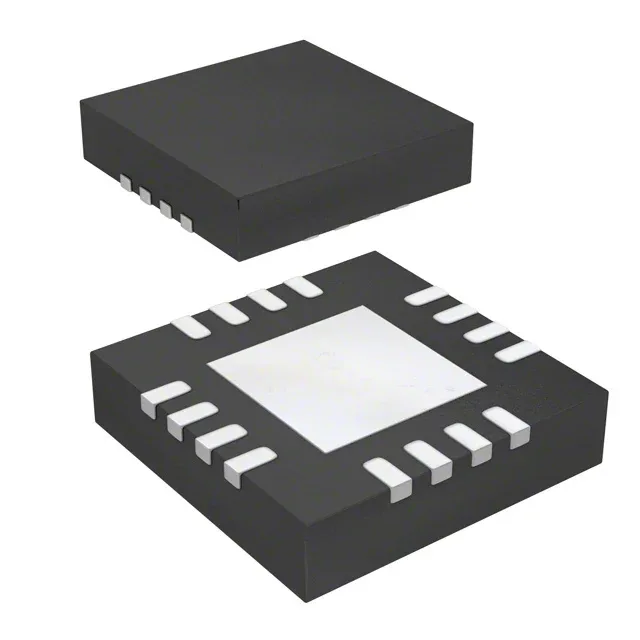
Analog Devices MAX1501ETE+ — Power Management (PMIC / Gate Driver)

MAX1501ETE+ Battery Charger IC, Multi-Chemistry, 1.4A

MPNMAX1501ETE+
End of Life

Maxim Integrated MAX1501ETE+, Multi-Chemistry Battery Charger IC, 1-3 Cells, Programmable Constant Current to 1.4A, Overvoltage Protection, -40°C to 85°C, 16-TQFN (5x5), Surface Mount, Tube.

$6.25Ref. price · indicative, final on quote
Packaging16-WQFN Exposed Pad
RoHSROHS3 Compliant
Sourced new & surplus through independent channelsAuthenticity-screened · ESD-safe packingListing updated Aug 2026

Specifications

MAX1501ETE+ specifications
ParameterValue
MountingSurface Mount
Voltage6.25V
Current - chargingConstant - Programmable
Charge current - max1.4A
Operating temperature-40°C ~ 85°C (TA)
PackageTube
Case16-WQFN Exposed Pad
Number of cells1 ~ 3
Fault protectionOver Voltage
Battery chemistryMulti-Chemistry

Product details

Multi-chemistry charger for 1–3 cell packs

The Maxim Integrated MAX1501ETE+ is a multi-chemistry battery charger IC in a 16-TQFN (5x5) package, designed to charge 1 to 3 series cells with a programmable constant-current profile up to 1.4 A. It handles Li-ion, Li-Poly, NiMH, and NiCd chemistries from a single supply rail up to 6.25 V, with built-in overvoltage fault protection.

1.4 A programmable charge current — sizing the thermal budget

The 1.4 A maximum charge current is the key rating for BOM thermal planning.

Overvoltage protection — one less external supervisor

The integrated overvoltage fault protection monitors the battery voltage and disables charging if the cell voltage exceeds the safe threshold.

Active lifecycle — no LTB pressure for production builds

No last-time-buy window is open, and no successor has been announced.

Frequently asked questions

Can MAX1501ETE+ charge lithium iron phosphate batteries?

The device supports multi-chemistry charging, which typically includes LiFePO4 when the charge voltage is set appropriately. The datasheet should be consulted to confirm the charge voltage programming range covers the LiFePO4 full-charge voltage (typically 3.6 V/cell). The evidence does not explicitly list LiFePO4.