10-bit SAR ADC with I²C — what the specs mean for your board
It samples at 94.4k samples per second, which is fast enough for most sensor-conditioning loops, motor-current monitoring, or battery-voltage logging, but not for audio or high-speed data acquisition. The SAR architecture gives you deterministic conversion time with no pipeline delay — every sample is ready in one cycle, which matters when you need to correlate a conversion with an external event. The input multiplexer can be configured for either 6 differential or 12 single-ended channels, and the input type supports both differential and single-ended signals. Differential mode gives you common-mode rejection on long sensor leads; single-ended mode doubles the channel count for monitoring multiple DC voltages on the same board. The MUX-S/H-ADC configuration means the sample-hold is after the mux, so you get the same acquisition time regardless of channel count. Supply voltage for both analog and digital sections runs from 2.7 V to 3.6 V, so a single 3.3 V rail powers the whole part — no separate analog supply needed. The reference can be either external or internal. Using the internal reference saves a component and a pin, but the external reference option lets you tie to a precision voltage source if the system demands tighter absolute accuracy or a ratiometric measurement.
Package, temperature grade, and where it fits
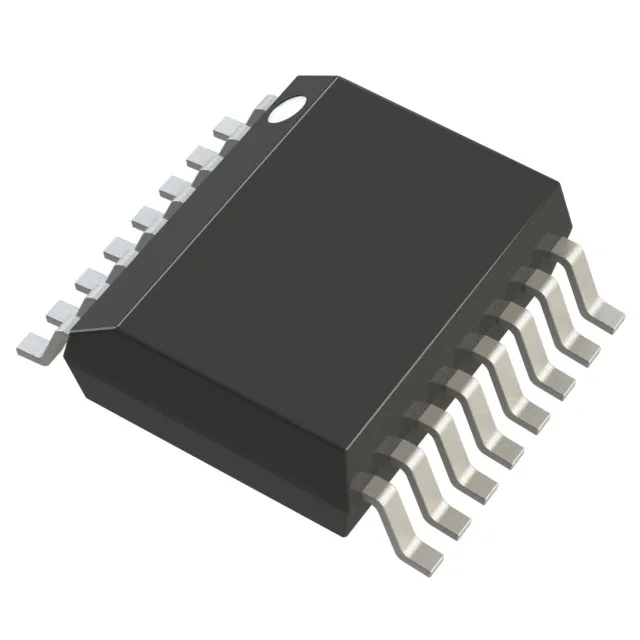
Housed in a 16-pin QSOP with a 0.154-inch body width, this is a surface-mount part that fits on compact PCBs.