What the reset polarity means for your design
The ADM1810-10ART-REEL: The Active Low output means it drives the reset line of a microcontroller or DSP that expects a low-true reset pulse — common on many ARM Cortex-M and legacy 8-bit cores. If your processor expects a high-true reset, you would need the ADM1817 variant instead.
Footprint and package compatibility
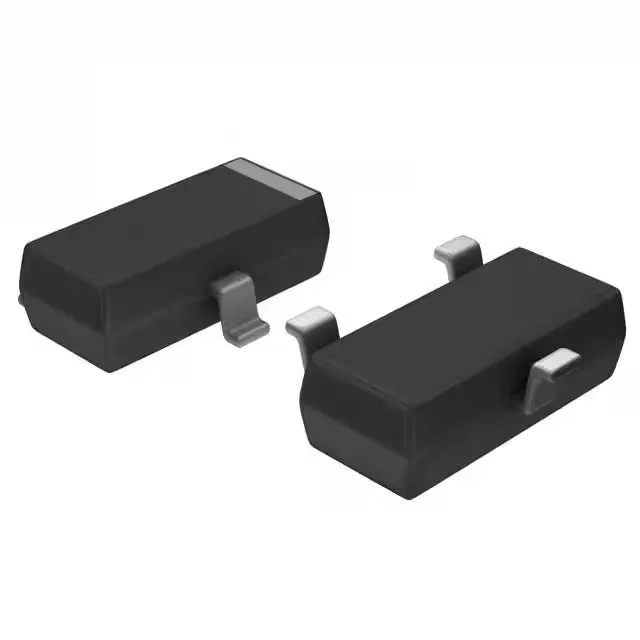
Housed in a 3-lead SOT-23-3 package (also known as TO-236-3 or SC-59), this part shares the same footprint as the ADM1810-10ARTZ-RL7. The SOT-23-3 is a standard small-signal transistor outline with 0.95 mm pitch — the same land pattern used by countless voltage supervisors and reset generators. No board spin needed if you're swapping between these two ADM1810 variants; the pin 1 orientation and pad layout are identical.
Single-voltage monitoring with push-pull drive
This IC monitors a single voltage rail and provides a push-pull, totem-pole output — no external pull-up resistor needed. The push-pull stage drives the reset line rail-to-rail, which eliminates the weak-high state you get with open-drain outputs. The 100 ms minimum reset timeout gives the system power supply and oscillator time to stabilize before the processor starts executing code. At 4.35 V threshold (from the description), it's suited for 5 V logic systems where the supervisor must assert reset before the supply drops below the processor's minimum operating voltage.