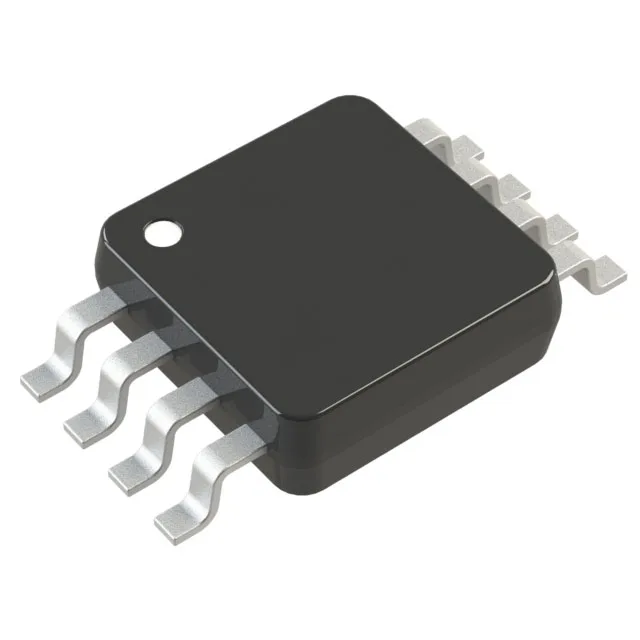
Analog Devices AD8236ARMZ-R7 — Microcontrollers & Processors (MCU / MPU / DSP)

AD8236ARMZ-R7 Instrumentation Amp, 23 kHz, 8-MSOP

MPNAD8236ARMZ-R7
End of Life

Analog Devices AD8236ARMZ-R7 instrumentation amplifier, single circuit, 23 kHz bandwidth, 0.011 V/µs slew rate, rail-to-rail output, 8-MSOP package, tape and reel.

$3.59Ref. price · indicative, final on quote
Packaging8-TSSOP, 8-MSOP (0.118", 3.00mm Width)
RoHSROHS3 Compliant
Independent supplier — new & surplus stockAuthenticity-screened · ESD-safe packingListing updated Aug 2026

Specifications

AD8236ARMZ-R7 specifications
ParameterValue
Output typeRail-to-Rail
MountingSurface Mount
Amplifier typeInstrumentation
Voltage - input offset3.5 mV
Voltage - supply span5.5 V
Current - supply33µA
Current - input bias1 pA
Current - output (Channel)6 mA
Operating temperature-40°C ~ 125°C
-3db bandwidth23 kHz
PackageTape & Reel (TR); Cut Tape (CT)
Slew rate0.011V/µs
Case8-TSSOP, 8-MSOP (0.118\", 3.00mm Width)
Number of circuits1

Product details

Instrumentation amplifier for low-frequency sensor front-ends

The AD8236ARMZ-R7 is a single-supply instrumentation amplifier from Analog Devices, built for precision signal conditioning in the DC-to-low-kHz range. Drawing only 33 µA supply current, the part suits battery-powered or loop-powered transmitter designs where every microamp matters. The rail-to-rail output stage lets it swing close to the supply rails, preserving dynamic range in low-voltage systems down to 1.8 V.

What the 1 pA input bias and 3.5 mV offset mean for your BOM

The 1 pA typical input bias current means the AD8236ARMZ-R7 loads the source negligibly — a 10 MΩ source impedance sees only 10 µV of voltage error from bias current, so no external buffer is needed. The 3.5 mV maximum input offset voltage is the dominant DC error term; for a 100 mV full-scale bridge output, that is 3.5% error before any gain-stage drift. Plan a system calibration or digital trim if your accuracy target is below 1%. The 6 mA output current capability drives typical SAR ADC inputs or a second gain stage directly, but will not drive a heavy cable or a 50 Ω back-terminated line — budget a buffer if the output must drive more than a few hundred pF of load capacitance.

Supply voltage, temperature range, and package

Housed in an 8-MSOP (0.118" body width, 3.00 mm) surface-mount package, the footprint matches the industry-standard MSOP-8. The tape-and-reel option is the standard 7-inch reel quantity for automated pick-and-place.

Frequently asked questions

What is the closest functional second-source to AD8236ARMZ-R7?

The AD8237ARMZ-R7 is a pin-compatible instrumentation amplifier in the same 8-MSOP package, but with a 200 kHz bandwidth and 0.15 V/µs slew rate — roughly 8× faster than the AD8236ARMZ-R7. It also draws 250 pA input bias current versus 1 pA, and offers a lower 25 µV typical input offset. If your design needs more bandwidth or lower offset, the AD8237ARMZ-R7 drops into the same footprint without a board spin. However, the AD8236ARMZ-R7's 33 µA supply current is lower than the AD8237's typical draw, so for the lowest-power instrumentation front-end, the AD8236ARMZ-R7 remains the better choice.

Will AD8236ARMZ-R7 drop into a board designed for AD8237ARMZ-R7?

Yes — both parts share the same 8-MSOP package and pinout. The supply voltage range, number of circuits, and rail-to-rail output are identical. The swap is footprint-compatible, but the bandwidth and slew rate differ significantly: the AD8236ARMZ-R7 is a 23 kHz, 0.011 V/µs part versus the AD8237's 200 kHz, 0.15 V/µs. If the board's compensation or filter network was tuned for the faster part, expect a slower settling time and reduced phase margin with the AD8236ARMZ-R7.