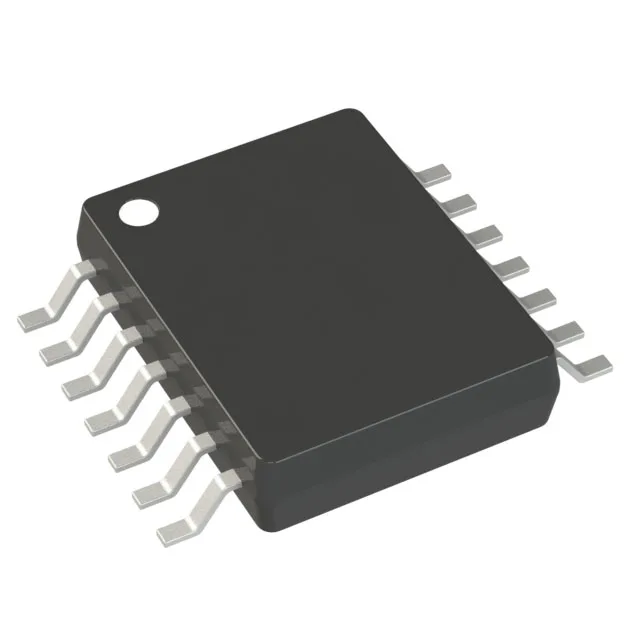
What the 1024 taps and 50kΩ end-to-end resistance mean for your circuit
The AD5292BRUZ-50 is a single-channel digital potentiometer with 1024 wiper tap positions across a 50kΩ end-to-end resistance. Each step gives a resolution of roughly 48.8 Ω, which is fine enough for precision gain trimming in programmable amplifiers or for setting voltage references in a calibration loop. The non-volatile memory stores the wiper setting at power-down, so the part wakes up at the last programmed position — no need for a microcontroller to re-initialize the wiper on every power cycle. This is useful in trimpot-replacement applications where the setting must persist across reboots. End-to-end resistance tolerance is ±1%, which is tighter than the typical ±20% of a mechanical trimpot. In a production environment, this reduces the calibration spread across boards — fewer units fall outside the target window at first power-up.
Supply voltage flexibility and temperature range
This covers common industrial rails (12 V, 24 V, ±15 V) without needing an extra regulator. The wide range also means the analog signal swing can be larger than what a 5 V-only digipot allows. Industrial temperature grade from -40°C to +105°C suits it for factory-floor control cabinets, motor-drive feedback loops, and outdoor instrumentation that sees thermal cycling. The 35 ppm/°C tempo (typical) keeps the resistance drift small across that span — about 1.75 Ω change per 10°C shift at the 50kΩ endpoint.
Package and board-level integration
The cascade pin allows multiple AD5292 devices to share a single SPI bus without extra chip-select lines — the wiper data shifts through one device to the next.