What the 300 A peak pulse rating decides
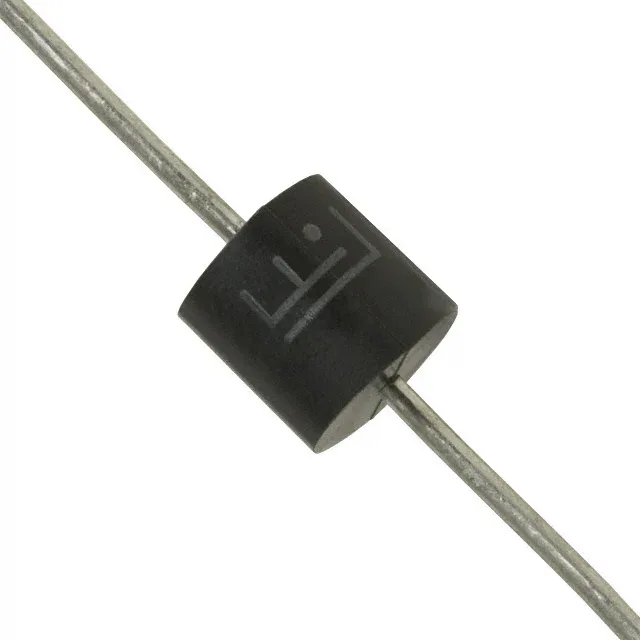
The 5KP10CA/B: The 300 A peak pulse (10/1000 µs waveform) sets the surge-handling ceiling for this part — it survives a single-event 5 kJ transient but is sized for the lower-energy end of the IEC 61000-4-5 test spectrum, not direct lightning or high-fault-current bus events. A downstream circuit expecting to see larger surge currents needs a higher-rated TVS or a coordinated upstream gas-discharge tube. The 5 kW rating is the product of the 300 A and the 17 V clamping voltage, so both numbers must be evaluated together against the threat profile of the end equipment. Bidirectional means it clamps both polarities without a stacking diode arrangement — the 'CA' suffix confirms the bidirectional polarity orientation. The 10 V reverse standoff is the bias level the TVS sits above during normal operation; the 11.1 V minimum breakdown is where it begins conducting, and the 17 V maximum clamping voltage is what the protected node is exposed to during the active event.
Voltage thresholds and what they protect
The 10 V standoff rating makes this part suited for 5 V and 12 V rail protection — it sits off-state above the normal operating voltage. For a 12 V automotive or industrial rail, a 10 V standoff gives roughly 2 V of margin above the nominal rail, which is typical for transient protection on those bus voltages. A 5 V rail with this part has tighter margin, which may be acceptable for EFT and ESD events but not for load-dump transients without additional headroom. Layout should keep the TVS leads short and the thermal path to the board plane clear; the P600 axial leadframe dissipates some heat through the leads before it reaches the epoxy body.