What this 8:1 mux does that a generic 4051 might not
The 74VHC4051AFT is a single 8:1 multiplexer/demultiplexer from Toshiba's VHC family, built to switch analog or digital signals with a max on-resistance of 37 ohm. That R_on ceiling is lower than many legacy 4051 parts, which means less voltage drop and better signal integrity when you're routing a 3.3 V analog front-end or a composite video line. The -3 dB bandwidth of 180 MHz tells you this part can pass fast edges — think video pixel clocks or high-speed comparator outputs — without rounding them off. Crosstalk is held to -45 dB at 1 MHz, so adjacent channels don't bleed into each other in a multi-sensor multiplexing application.
Supply rails and temperature — where it fits on the board
Single-supply range is 2 V to 5.5 V, covering both 3.3 V and 5 V logic rails. That means you can run it off the same rail as the MCU or FPGA without a separate regulator. Channel-to-channel matching is 5 ohm max, so if you're switching gain-setting resistors in a programmable amplifier, the offset between channels stays tight. Off-leakage current is 100 nA max — negligible in most signal paths, but worth checking if you're multiplexing high-impedance sensor outputs.
Package, lifecycle, and sourcing posture
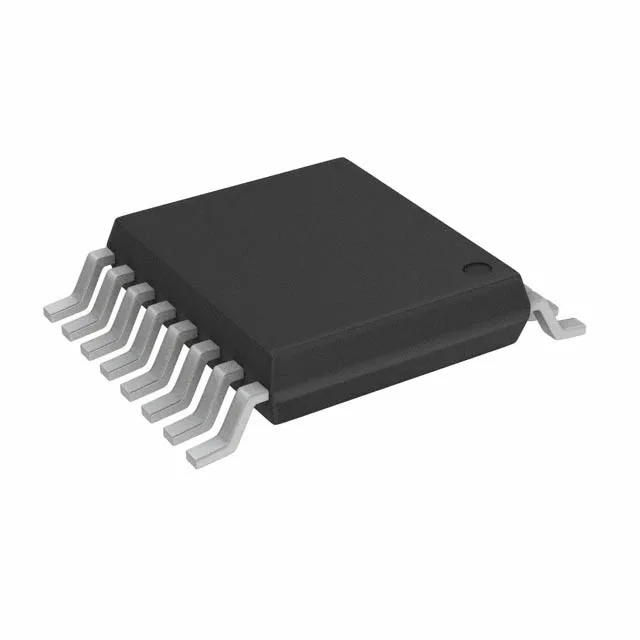
The 74VHC4051AFT comes in a 16-TSSOP package, 0.173-inch body width, 4.40 mm wide — the standard footprint for this pinout. Lifecycle status is Active, so Toshiba is still manufacturing this part — no end-of-life notice, no last-time-buy scramble. ROHS3 compliant.