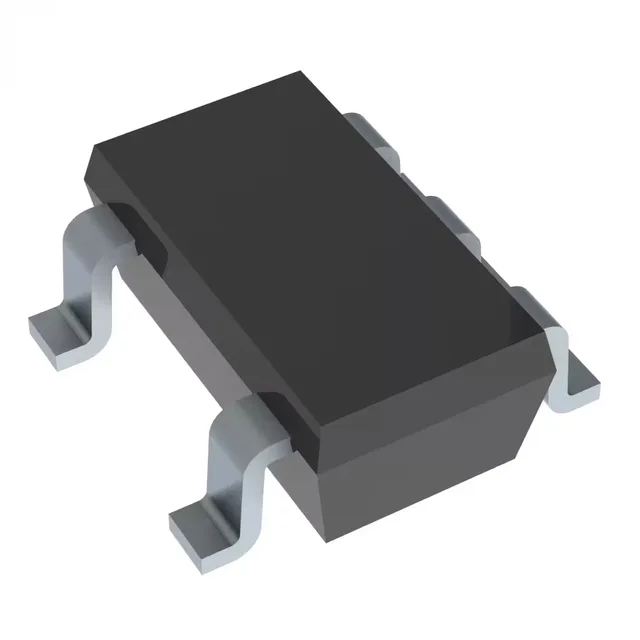
The Texas Instruments TPS70933DBVR is a 3.3 V fixed-output low-dropout regulator rated at 150 mA, in a five-lead SOT-23-5 (SC-74A/SOT-753). Its headline is a 30 V absolute maximum input combined with an ultra-low 2.05 µA quiescent current — an unusual pairing. Most low-Iq LDOs live at a 6 V or 7 V input ceiling; the TPS709 family takes the full 30 V, so it can regulate directly from a 24 V industrial bus, an automotive battery-side rail, or a widely toleranced DC supply without an intermediate pre-regulator or input divider. The price for that range is dropout: 1.4 V maximum at 150 mA, which is expected for a high-voltage LDO, so a 5 V input leaves about 3.6 V at the pin before regulation is lost.
With 2.05 µA typical quiescent current and a 350 µA maximum supply current, it suits always-on monitoring circuits, sensor supplies, watchdog and telemetry blocks, and standby rails in industrial and automotive systems where the board must draw almost nothing when idle. The enable pin gives simple on/off gating for power sequencing, and protection includes over-current, over-temperature, reverse-current, and under-voltage lockout — the reverse-current protection matters in designs where the output rail can back-drive the input through a partially powered subsystem. PSRR is 80 dB at 10 Hz easing to 52 dB at 1 kHz, adequate for MCU and interface rails. Operating range is -40 °C to 125 °C. Selection notes: keep the 150 mA ceiling and the 1.4 V dropout in mind for load budgeting, and note the SOT-23-5 pinout when replacing an existing three-pin SOT-23 LDO — the enable pin changes the layout.