Polymer bypass — what 15 mΩ ESR actually means
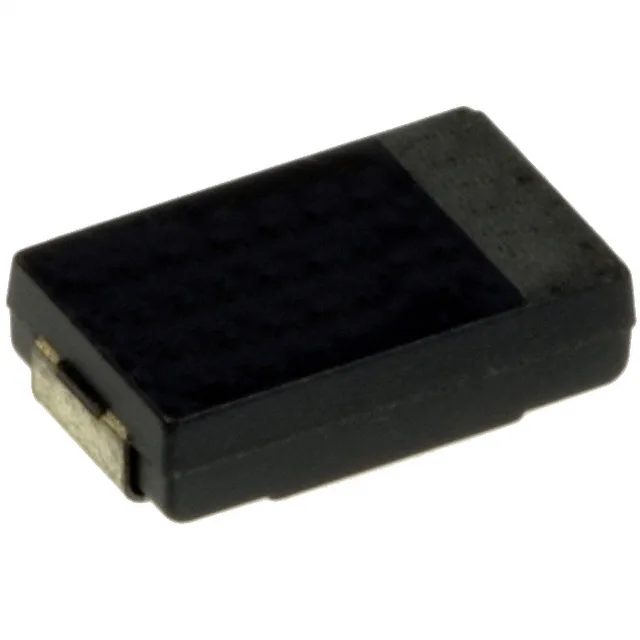
The EEF-CX0J181R: The SP-Cap CX series is Panasonic's polymer aluminum electrolytic line, and the 15 mΩ ESR on this 180 µF part is the spec that drives the selection decision. At 100 kHz — the typical switching frequency of a synchronous buck — the capacitor's impedance sits right at its minimum, so the ESR dominates the total impedance budget. A 5.1 A RMS ripple current rating at that same frequency tells you the part is rated for the AC current a DC-DC converter's input or output bypass actually carries, not just the DC bias voltage. The two numbers are paired in the datasheet for a reason: they describe the same operating point.
Thermal headroom for power-stage deployment
The 2000-hour lifetime at 105°C sounds modest compared to some wet electrolytics, but polymer caps age differently — the electrolyte is solid, so there is no dry-out mechanism. The 2000-hour figure is a conservative wear-out threshold under sustained high-temperature stress. For a bypass cap that sees pulsed ripple rather than continuous DC stress, the actual life in a typical board-level application runs well beyond that number. The -55°C cold floor also matters for outdoor or vehicle-adjacent designs where the capacitor sees startup below room temperature.
Package footprint and assembly fit
The 2917 (7343 metric) package lands on a 7.30 mm × 4.30 mm land pattern — the same footprint as every other SP-Cap CX part in this case size. The 1.90 mm seated height fits under most low-profile inductor solutions on POL converters without a slot or cavity in the PCB. Tape-and-reel packaging with a single-digit width tolerance per EIA-481 supports high-volume pick-and-place without special consideration — the carrier tape width is set by the 7.30 mm body length.