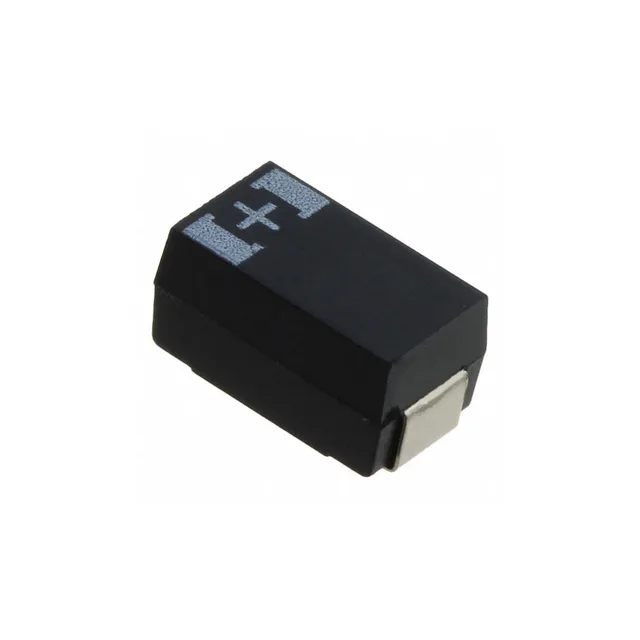
ESR performance sets the ripple floor
The 6TPB330MVL: POSCAP polymer cathodes hold ESR flat across temperature and aging better than MnO₂ tantalum equivalents — the ESR does not drift upward as the part accumulates hours at temperature the way a wet electrolyte would. At 100 kHz the impedance is essentially resistive, so the 45 mΩ figure directly determines the ripple voltage: a 1 A load step at 100 kHz produces 45 mV of ripple on a single 330 µF POSCAP. Adding a smaller ceramic in parallel drops the composite impedance above the POSCAP's self-resonant frequency and brings the ripple down further.
Temperature grade and lifetime in industrial-ambient designs
The operating window is -55 °C to 105 °C, and the endurance rating is 2000 hours at the upper temperature limit. That 2000-hour figure is the accelerated test condition — in practice, derating the voltage to 80 % of rated pushes the actual service life well past 10,000 hours at 85 °C, which covers most industrial and infrastructure equipment lifetimes without a replacement cycle. The molded construction provides a hermetic package seal that protects the anode structure from humidity ingress, making it suitable for enclosed equipment in uncontrolled-ambient environments where conformal coat alone would be insufficient.
2917 SMD footprint — assembly and pad layout
It is a standard J-lead SMD footprint — the same land pattern used across many manufacturers' B and D-case tantalum and POSCAP parts. The D3L manufacturer size code is Panasonic's internal footprint identifier; confirm the land pattern against the Panasonic datasheet for the TPB series before committing the layout, as anode/cathode orientation and the exact pad suppression differ from generic case-size references. The part ships on tape and reel for automated placement.