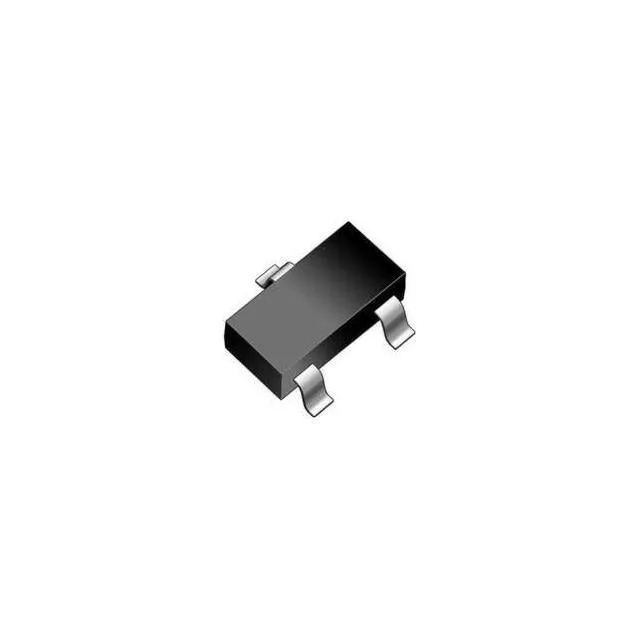
2N7002K - onsemi
MOSFET N-CH 60V 320MA SOT23
Full Technical Specifications
15 Parameters| Parameter / Attribute | Specification / Value |
|---|---|
| FET type | N-Channel |
| Mounting | Surface Mount |
| Drain to source voltage | 60 V |
| Drive voltage (Max rds on, min rds on) | 4.5V, 10V |
| Current - continuous drain (Id) @ 25°C | 320mA (Ta) |
| Power dissipation | 300mW (Ta) |
| Operating temperature | -55°C~150°C(TJ) |
| Package | Tape & Reel (TR); Cut Tape (CT) |
| Vgs | ±20V |
| Technology | MOSFET (Metal Oxide) |
| Case | TO-236-3, SC-59, SOT-23-3 |
| Vgs(th) (Max) @ id | 2.3V @ 250µA |
| Rds on (Max) @ id, vgs | 1.6Ohm @ 500mA, 10V |
| Gate charge (Qg) (Max) @ vgs | 0.7 nC @ 4.5 V |
| Input capacitance (Ciss) (Max) @ vds | 24.5 pF @ 20 V |
Need Stock or a Drop-in Second-Source for 2N7002K?
Package: SOT-23 (+ TO-92 for 2N7000) · Pin-compatible replacements with immediate Shenzhen spot stock
These two SOT-23 MOSFETs are the level shifters and small switches of modern boards: the standard parts behind I2C bus translation, 3.3V-to-5V interfacing, small load switching and a hundred interfaces that needed something better than a resistor. The pair reads as one drawer and is not one part: the classic 2N7002 is the 60V general switcher whose threshold spec assumed a real gate drive, while the BSS138 is the low-threshold original marketed precisely for 1.8V and 3.3V logic. The variants blur the line constantly - the 2N7002K generation moved thresholds down toward BSS138 territory, and the BSS138K moved voltage up toward 60V - which is exactly why the substitution discipline here is reading the threshold margin and the on-resistance at the actual gate voltage, not the family glance.
Verified Pin-Compatible Replacements (4 verified alternatives)
The Level-Shifter Standard
Shenzhen Spot Stock (24-48h Dispatch)
The low-threshold standard: 50V class, gate threshold typically under 1.5V maximum, on-resistance around 1.6-3.5 ohms at 5-10V gate - the part the classic bidirectional I2C level shifter circuit is drawn around.
50V class (60V in the K variant); 200-280mA class current.
The Improved Threshold Generation
Shenzhen Spot Stock (24-48h Dispatch)
The modern 2N7002 die: 60V rating with the threshold lowered (about 1.1-1.3V typical) toward BSS138 territory - documented by several sources as a functional substitute for the BSS138 in level-shifter duty.
60V class - the voltage advantage over the plain BSS138.
The Through-Hole Sibling
Shenzhen Spot Stock (24-48h Dispatch)
The TO-92 version of the 2N7002 design: same small-signal N-channel idea in the legacy through-hole body - the repair-shelf part for boards that predate SMD.
60V class; the same modest current envelope.
The Power Tier Next Door
Shenzhen Spot Stock (24-48h Dispatch)
The power-tier neighbor: a SOT-23 MOSFET built for actual current (30V class, several amps with a couple of tens of milliohms) - what the 2N7002 family becomes when a small load needs real switching.
30V class - a different voltage world from the 50-60V small-signal pair.
Buyer & Quality Checklist for Sourcing Alternatives
- The threshold margin is the whole selection: the classic 2N7002 (max threshold near 2.5V) wants a real gate drive; BSS138 (max about 1.5V) and the K-suffix generations exist for 1.8V/3.3V logic. Read VGS(th) AND the on-resistance at the actual gate voltage - the headline Rds numbers are at 5-10V.
- The K suffixes modernized both rows (2N7002K, BSS138K): the letters now matter more than the family names in level-shifter and switch substitutions.
- SOT-23 MOSFET pinouts are maker drawings, not a standard: the same body hosts G/S/D in different orders across the industry - the schematic symbol orientation does not protect the placement machine.
- The bidirectional level shifter depends on the body diode: wiring it gate-to-low-rail with pull-ups on both sides works in both directions only when the orientation is right. A reversed part looks assembled and blocks one direction.
- Current is small-signal: 200-300mA class at these Rds - driving relays or lamps directly is the AO3400 tier question, not this pair.
- At bus speeds, the level-shifter limits are the pull-up values and the capacitance: a shifter that works at 100kHz and fails at 400kHz is a resistor arithmetic problem, not a transistor one.
Frequently Asked Technical Questions
Q: Can BSS138 and 2N7002 replace each other?
A: Direction matters: BSS138 (and 2N7002K-class parts) drive from low-voltage logic where the classic 2N7002 threshold leaves no margin; a plain 2N7002 in a 1.8V shifter is the substitution that half-works. Also compare the 50V/60V ratings and the Rds at the actual gate voltage.
Q: Why do I2C level shifters use BSS138?
A: Low threshold plus symmetric pull-ups: the part stays fully enhanced from the 1.8V or 3.3V rail and its body diode provides the second direction. The circuit is two resistors and one BSS138 per line - the standard figure works because the threshold suits the low rail.
Q: Is 2N7000 the same as 2N7002?
A: The same design in different bodies: 2N7000 is TO-92 through-hole, 2N7002 is SOT-23 - and their pin orders differ. Same circuit role, different footprints and assembly worlds.