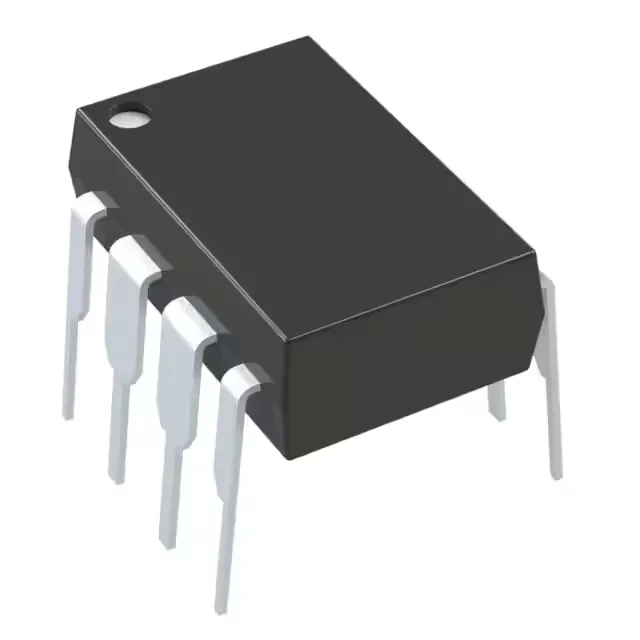
Microchip Technology MCP2551-E/P
Full Technical Specifications
10 Parameters| Parameter / Attribute | Specification / Value |
|---|---|
| Type | Transceiver |
| Mounting | Through Hole |
| Supply voltage | 4.5V ~ 5.5V |
| Protocol | CANbus |
| Operating temperature | -40°C~125°C |
| Duplex | Half |
| Package | Tube |
| Case | 8-DIP (0.300\", 7.62mm) |
| Receiver hysteresis | 200 mV |
| Number of drivers (Receivers) | 1/1 |
Need Stock or a Drop-in Second-Source for MCP2551-E/P?
Package: SO-8 · Pin-compatible replacements with immediate Shenzhen spot stock
The TJA1050 is the CAN transceiver of a generation of automotive and industrial boards - 5V supply, classic CAN up to 1Mbps, SO-8. It is also where the field splits in three directions buyers keep confusing: the pin-compatible TJA1051 upgrade (same footprint, CAN FD to 5Mbps), the standby-mode TJA1042, and the entirely different 3.3V camp (SN65HVD230) whose parts are neither pin- nor supply-compatible with the 5V family despite looking alike. The transceiver sits on the same board as the vehicle network - the substitution has to match supply AND protocol class before the footprint conversation even starts.
Verified Pin-Compatible Replacements (4 verified alternatives)
The CAN FD Upgrade in the Same Footprint
Shenzhen Spot Stock (24-48h Dispatch)
The direct successor: same SO-8 pinout and 5V supply, with CAN FD support to 5Mbps across the whole series - the standard pin-compatible path forward from the 1050.
5V supply; the /3 variant adds a VIO pin for direct 3.3V MCU interfacing (keep the original circuit when not using it).
Standby Mode and SPLIT Pin
Shenzhen Spot Stock (24-48h Dispatch)
The standby-featured member: CAN FD to 5Mbps, 5V supply, with a SPLIT pin for bus common-mode stabilization and standby for sleep architectures.
5V; the /3 variant for 3.3V MCU interfacing; replaces the older TJA1040.
The 3.3V Camp - Different Rules
Shenzhen Spot Stock (24-48h Dispatch)
The 3.3V CAN transceiver: classic CAN to 1Mbps on a 3.3V rail - designed for 3.3V MCUs directly, not for 5V sockets.
3.3V supply - placing one in a 5V TJA1050 socket is a supply error before it is a signal error.
The Other 5V Classic
Shenzhen Spot Stock (24-48h Dispatch)
The Microchip classic 5V CAN transceiver, 1Mbps, long established in industrial boards alongside the TJA1050.
5V supply; same classic-CAN class as the TJA1050.
Buyer & Quality Checklist for Sourcing Alternatives
- Match the supply camp first: TJA1050/TJA1051/TJA1042/MCP2551 run 5V; SN65HVD230 runs 3.3V. The two camps look identical in SO-8 and are not interchangeable.
- Match the protocol class second: TJA1050 and MCP2551 are classic CAN (1Mbps); the TJA1051/1042/1044 (G variants) do CAN FD to 5Mbps. Fitting an FD part on a classic network is safe (it runs classic); the reverse direction limits the bus.
- The TJA1050 to TJA1051 move is the one true pin-compatible upgrade - and the /3 suffix (VIO pin) changes the wiring conversation even though the footprint stays.
- The TJA1044 (MANTIS) removed the SPLIT pin from the 1042 lineage: circuits that used SPLIT need their common-mode stabilization reviewed when crossing those two.
- Termination is board-side physics: 120-ohm bus ends, stub length and common-mode choke were tuned around the original transceiver - check them when the part changes speed class.
- For fleet repairs keep the two camps physically separated in the parts drawer; the most expensive CAN repair error is a 5V part in a 3.3V socket found after the smoke test.
Frequently Asked Technical Questions
Q: Is TJA1051 a drop-in for TJA1050?
A: Yes - the same SO-8 footprint and 5V supply, with CAN FD added across the series. The /3 variant routes 3.3V logic via a VIO pin; verify that pin handling when substituting into a plain 1050 circuit.
Q: Can I use SN65HVD230 instead of TJA1050?
A: Not in a 5V socket: the SN65HVD230 is a 3.3V part. The two look alike in SO-8 and belong to different supply camps - pick by the MCU rail first, then by CAN versus CAN FD.
Q: What is the difference between TJA1042 and TJA1044?
A: The 1044 is the newer MANTIS-family successor: standby stays, the SPLIT pin is removed, and only the G variants carry the full CAN FD rating. Circuits using SPLIT need a review when crossing from 1042.