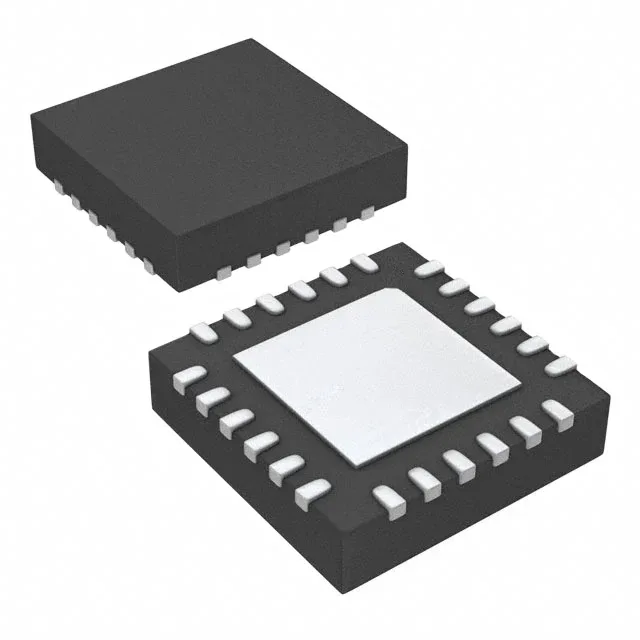
Microchip Technology MCP23S18-E/MJ — Digital Isolators

MCP23S18-E/MJ SPI GPIO Expander, 16 I/O, 10 MHz

MPNMCP23S18-E/MJ
End of Life

Microchip MCP23S18-E/MJ SPI GPIO expander, 16 I/O, 10 MHz SPI, open-drain outputs, 1.8V–5.5V supply, -40°C to 125°C, 24-QFN (4x4) package.

$2.15Ref. price · indicative, final on quote
Packaging24-VFQFN Exposed Pad
RoHSROHS3 Compliant
Independent supplier — new & surplus stockAuthenticity-screened · ESD-safe packingListing updated Aug 2026

Specifications

MCP23S18-E/MJ specifications
ParameterValue
Output typeOpen Drain
MountingSurface Mount
Voltage1.8V ~ 5.5V
Current - output source (Sink)25mA
Frequency10 MHz
InterfaceSPI
Operating temperature-40°C ~ 125°C
PackageTube
Number of i (O)16
Case24-VFQFN Exposed Pad
Interrupt outputYes

Product details

SPI GPIO expander for industrial and mixed-voltage systems

The Microchip MCP23S18-E/MJ is a 16-bit SPI GPIO expander in a 24-QFN (4x4) package, providing 16 I/O lines with open-drain outputs and a 10 MHz SPI interface. Each I/O can sink or source 25 mA, enough to drive LEDs or small relays directly without external buffers. The open-drain output type allows wired-OR connections and level translation between supply domains on the same bus. An interrupt output pin (INTA) is provided, so the host MCU does not need to poll the expander continuously — the expander asserts the interrupt when an input changes, reducing firmware overhead in event-driven systems.

At 10 MHz SPI clock, each 16-bit read or write completes in 1.6 µs. For a system scanning all 16 inputs sequentially, the total bus occupancy is roughly 3.2 µs per scan cycle. This leaves ample margin for slower MCUs running at 8–16 MHz and for shared SPI buses with multiple peripherals.

The exposed pad is electrically connected to VSS and must be soldered to the ground pour. The small footprint suits space-constrained designs like sensor modules or handheld instruments.

It is RoHS3 compliant, which means no exemptions for lead in solder — compatible with lead-free reflow profiles.

Frequently asked questions

What is the maximum SPI clock frequency of MCP23S18-E/MJ?

The maximum SPI clock frequency is 10 MHz. This allows fast register access — a 16-bit word transfer takes about 1.6 µs at full speed.

How does MCP23S18-E/MJ differ from MCP23S17?

The MCP23S18-E/MJ uses an SPI interface, while the MCP23S17 uses I²C. Both offer 16 I/O, but the SPI version supports higher data rates (10 MHz vs 400 kHz for I²C) and does not require pull-up resistors on the bus. The pinout and register maps also differ, so they are not drop-in replacements.

Is MCP23S18-E/MJ RoHS compliant?

Suitable for lead-free assembly.

Does MCP23S18-E/MJ support interrupt output?

Yes, the expander has an interrupt output pin that asserts low when an input pin changes state. The interrupt can be configured for edge or level sensitivity via the control registers.