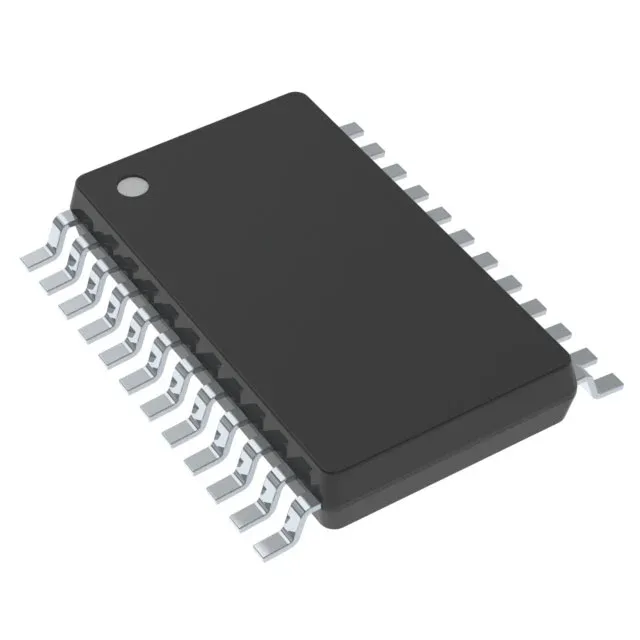
Small CPLD for 5V glue logic
The Microchip ATF750CL-15XU is a 5V-only EE PLD with 10 macrocells and a 15 ns pin-to-pin propagation delay. It belongs to the ATF750C(L) series, a mature family of small CPLDs used for address decoding, bus arbitration, and state-machine glue logic in 5V systems.
15 ns tpd — timing budget for 5V logic
The 15 ns maximum propagation delay (tpd) sets the speed floor for registered and combinatorial paths. In a 5V system clocked at 33 MHz, this leaves roughly 15 ns of setup margin after accounting for clock skew and output loading — tight but workable for simple decode or pipeline stages. If the design needs back-to-back registered operations at higher frequencies, the 10 ns or 7.5 ns siblings in the same family are the next step up.
10 macrocells — right-sized for board-level consolidation
Ten macrocells, each with a configurable flip-flop and product-term array, can absorb a handful of 74-series logic gates or a small state machine. The 10 dedicated I/O pins (plus dedicated input pins) give enough headroom for a 4-bit address decoder plus a few handshake signals. No JTAG or ISP on this part — programming is done via a standard device programmer before assembly, so plan for a pre-programmed or socketed step in production.
5V-only supply — no mixed-voltage trickery
The internal supply range is 4.5V to 5.5V, pure 5V. There is no separate I/O or core rail, and the inputs are not 3.3V-tolerant. Conversely, in a legacy 5V backplane or an industrial sensor interface, the single-supply simplicity is an advantage — one less regulator to qualify.
Microchip lists the ATF750CL-15XU as Active. The ATF750C(L) series has been in production for years and remains a staple for 5V CPLD applications. For dual-sourcing resilience, the ATF750CL is the low-power variant of the ATF750C — same pinout and function, lower dynamic power. If a second source is needed, the ATF750C (non-L) is a direct drop-in, though it draws slightly more supply current.