Logic density and I/O — what the 1280 LEs and 206 I/O mean for fit
The LCMXO3LF-1300C-5BG256I is a Lattice MachXO3 FPGA with 1280 logic elements (160 LABs/CLBs) and 206 user I/O — the I/O count is the full complement of the 256-ball package, so every ball on the 14x14 mm CABGA is either a signal or a supply rail, leaving no unused pads to route around. Operating temperature spans -40°C to 100°C (TJ), the industrial-plus band that covers outdoor telecom cabinets, engine-bay-adjacent enclosures, and factory-floor panels where ambient hits 85°C and the junction climbs another 15°C above that.
Package and board-fit — 256-CABGA with a 14x14 mm footprint
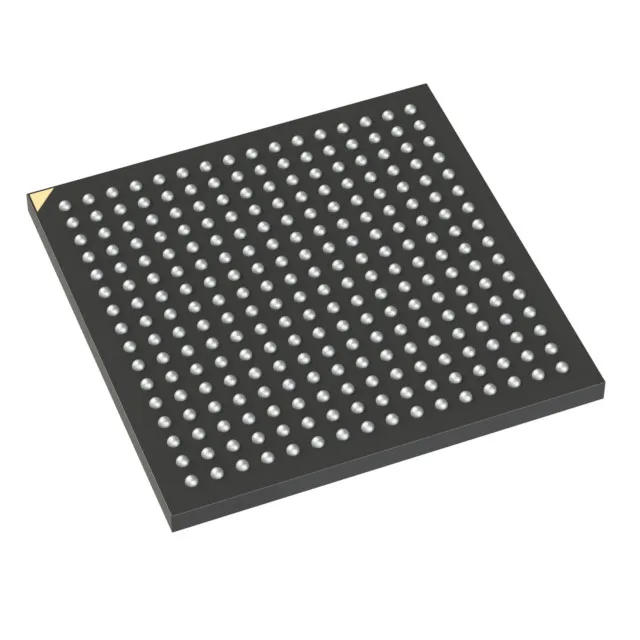
The 256-ball CABGA (14x14 mm body, 0.80 mm ball pitch) demands a 4-layer PCB minimum for fan-out — the inner rows of the 206 I/O grid cannot escape on two layers without buried vias or dog-bone breakout that violates the pad-to-pad clearance. Surface-mount only — the CABGA has no exposed thermal pad; junction-to-board thermal resistance is set by the solder-ball array and the copper plane area under the package, so a solid ground plane on layer 2 is the primary heat path.
Active lifecycle and compliance — no end-of-life concern
The MachXO3 series remains a current production family for glue-logic and I/O expansion applications. The part ships in a Tray, standard for BGA devices that require moisture-barrier bags and a bake step before reflow if the floor life is exceeded.
Sourcing — quoted to order against a BOM line
If a BOM hedge is required, the LCMXO2-1200UHC-4FTG256I offers a similar logic density (1280 LEs) and I/O count (206) in the same 256-ball footprint, but the MachXO2 series uses a different architecture and supply voltage range — a board spin and firmware port are needed.