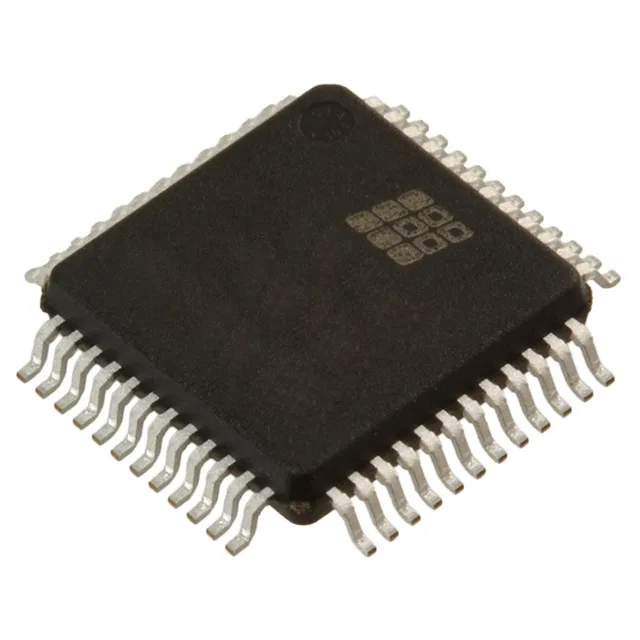
Lattice Semiconductor Corporation LC4032V-10TN48I — FPGA / CPLD & Programmable Logic

Lattice LC4032V-10TN48I CPLD, 32 Macrocells, 10 ns, 48-TQFP

MPNLC4032V-10TN48I
Active

Lattice Semiconductor ispMACH® 4000V CPLD, LC4032V-10TN48I, 32 macrocells, 10 ns tpd, 32 I/O, 48-TQFP, industrial temp -40°C to 105°C.

$3.8000Ref. price · indicative, final on quote
Packaging48-LQFP
RoHSROHS3 Compliant
SeriesispMACH® 4000V
Independent supplier — new & surplus stockAuthenticity-screened · ESD-safe packingListing updated Aug 2026

Specifications

LC4032V-10TN48I specifications
ParameterValue
SeriesispMACH® 4000V
MountingSurface Mount
Programmable typeIn System Programmable
Voltage supply - internal3V ~ 3.6V
Operating temperature-40°C ~ 105°C (TJ)
PackageTray
Number of i (O)32
Case48-LQFP
Number of macrocells32
Delay time tpd(1) max10 ns
Number of logic elements (Blocks)2

Product details

32-macrocell CPLD with 10 ns pin-to-pin delay

The LC4032V-10TN48I is a 32-macrocell CPLD from Lattice's ispMACH 4000V family, offering 32 I/O pins and a propagation delay of 10 ns max. That 10 ns tpd sets the combinatorial logic ceiling — any path through the device must settle within that window, which means it handles glue logic, address decoding, or state machines running up to about 80-100 MHz in a typical synchronous design.

The footprint is the same as many other 48-pin Lattice CPLDs, so a board laid out for the 7.5 ns variant (LC4032V-75TN48I) accepts this 10 ns part without a layout change. It ships in a tray, not tape-and-reel, which is typical for this package size — the tray keeps the leads aligned during handling and reflow.

In-system programmable via JTAG — no separate programmer voltage needed; the 3.3 V supply is enough for the programming algorithm, which simplifies board-level rework and field updates.

Frequently asked questions

Will the LC4032V-10TN48I drop into a board designed for the LC4032V-75TN48I?

Yes — both parts share the same 48-TQFP footprint, same 32 I/O count, and same supply voltage range. The only difference is the propagation delay: 10 ns vs 7.5 ns. If the design's timing closure was already met with 10 ns, the swap is pin-for-pin and functional.