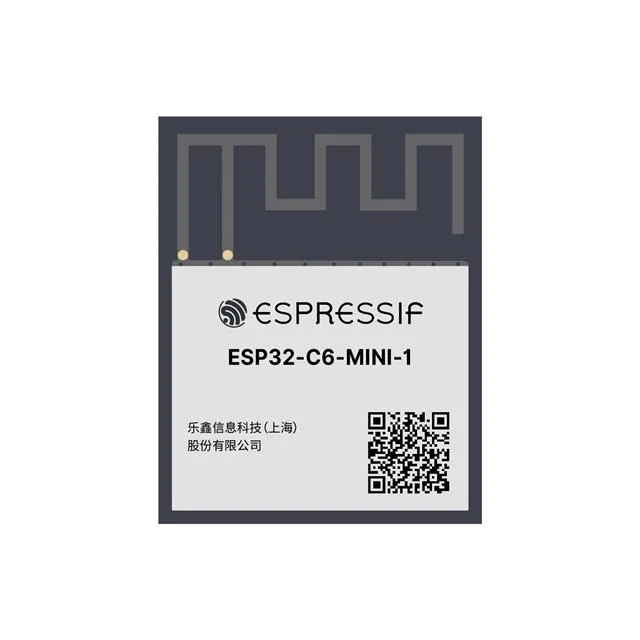
This is a surface-mount module from the ESP32-C6 series that bundles a 2.4 GHz radio supporting 802.11ax (Wi-Fi 6), Bluetooth v5.0, and Zigbee into a 53-SMD package. The 4 MB flash is enough to hold a full ESP-IDF or Arduino Core application with room for OTA update staging. For a sensor node logging data every minute, that flash budget covers several years of firmware evolution without a hardware spin.
Link budget and power draw at the bench
Rated TX output is 21 dBm — that's 125 mW at the module pin. With a 2 dBi antenna, the radiated power sits near the 20 dBm EIRP limit for 2.4 GHz ISM bands in most regions, so you may need to back off a couple of dB in software for regulatory pre-compliance. RX sensitivity is -106 dBm for the 802.11ax 20 MHz channel; combined with 21 dBm TX, the symmetric link budget is about 127 dB, enough for a 300-meter line-of-sight link at 1 Mbps. Current draw during transmission spans 82 mA to 354 mA, and receiving pulls 71 mA to 82 mA. The wide TX range reflects the difference between a low-power OFDM burst at 0 dBm and a full-power 21 dBm CCK transmission. Budget the power supply for the peak 354 mA plus a 30% margin for the module's internal LDO dropout.
Espressif Systems continues to manufacture this module, and the base product number ESP32-C6 is a current family. The 53-SMD land pattern is a castellated edge design — no fine-pitch BGA reflow required, so a standard solder profile for 0.8 mm to 1.6 mm boards works.