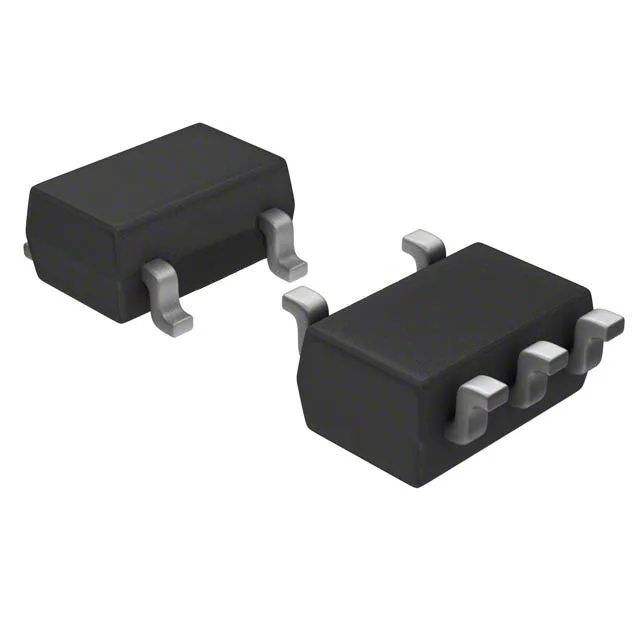
It is designed for microcontroller-based systems, industrial controllers, and automotive electronics where a reliable power-on reset and brown-out detection are required.
The typical reset timeout of 50 µs is the delay after the supply voltage rises above the threshold before the reset output is de-asserted. This short timeout allows the system to begin operation quickly after power-up, but it also means the supervisor does not hold the reset for an extended period to allow the oscillator or PLL to stabilise. For microcontrollers with a longer start-up sequence, an external reset extension or a supervisor with a longer timeout may be needed.
Active-low open-drain output — interface considerations
The reset output is active-low and open-drain, which means it can be wire-ORed with other reset sources (like a watchdog or manual reset button) and pulled up to any voltage up to the absolute maximum rating. This is the standard interface for driving the reset input of most MCUs and SoCs. The open-drain output also allows the supervisor to operate with a different pull-up voltage than its own supply, useful in mixed-voltage systems.