Its 9V to 72V supply range covers the common telecom -48V rail, 24V industrial buses, and 12V automotive systems, making it a general-purpose choice for any application where a board must be plugged into a powered slot without glitching the shared supply. The controller does not integrate the pass switch — it drives an external N-channel MOSFET, so the current rating scales with the FET you pair it with.
The 9V to 72V input range is the primary selection gate: a 48V telecom design sees plenty of headroom for transients, while a 12V automotive board still has margin above the nominal rail. The 1 mA supply current is the controller's own draw, negligible against the load current the external FET handles — it matters for standby power budgets but not for the main thermal calculation. Programmable UVLO lets you set the undervoltage lockout threshold with a resistor divider, so the controller stays off until the input rail is stable, preventing the FET from turning on during a brownout. The thermal limit feature protects the external FET by latching off if the die temperature exceeds the threshold — a useful safeguard when the load fault is a hard short that the current-limit loop alone cannot clear fast enough.
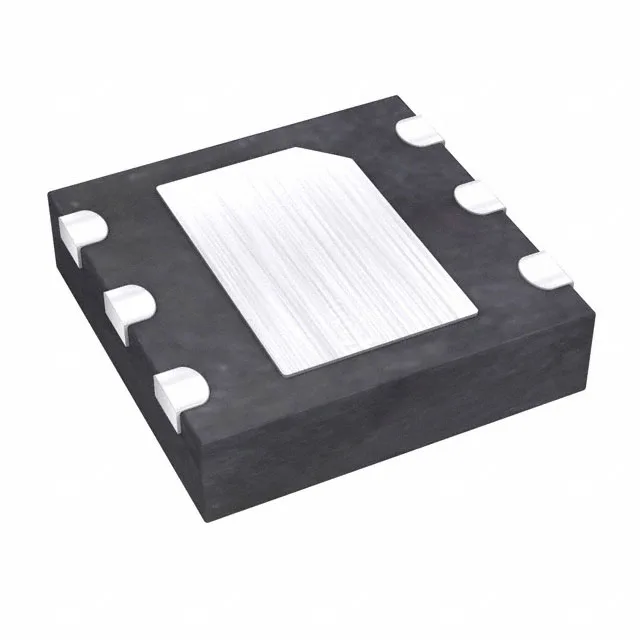
Housed in a 6-TDFN 3x3 mm exposed pad package, the MAX5903NNETT+T is surface-mount.
No official second source or pin-compatible alternate is cited in the available records; if dual-sourcing is a requirement, the design should accommodate a functional equivalent from another vendor with a similar UVLO-programmable hot swap controller in the same supply range.