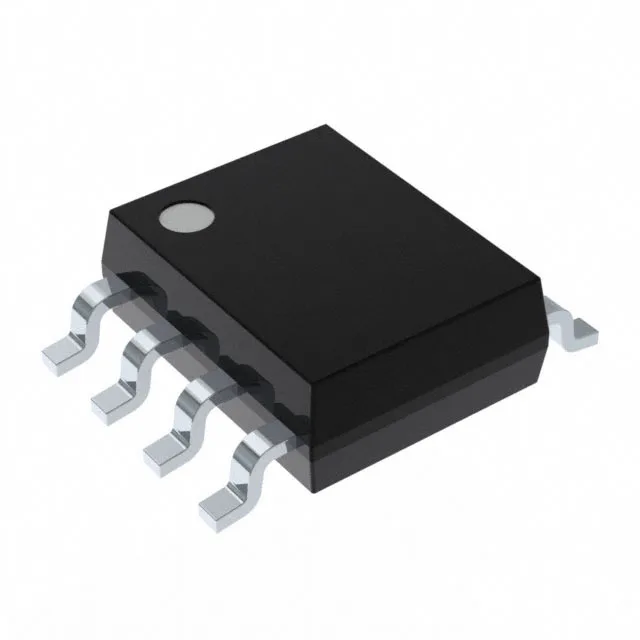
Analog Devices MAX31855NASA+T — Logic ICs
Technical Documents PDF / CAD
RoHS Compliant · Lead-Free EIA-481 Standard
Analog Devices / Logic ICs

MAX31855NASA+T Thermocouple to Digital Converter, 8-SOIC

MPN MAX31855NASA+T
End of Life Spot Stock · 24-48h Dispatch 100% Original Sealed

Analog Devices MAX31855NASA+T, Thermocouple to Digital Converter, Input Type Thermocouple (Multiple), Output Type Digital, Supply Current 900 µA, Operating Temperature -40°C ~ 125°C, Package 8-SOIC, Surface Mount.

In Stock: 1 pcs
MOQ: 1 pcs
Logistics: DHL / FedEx DAP (Global Express · 3-7d) Russia & CIS DDP (Door-to-Door Cleared)
Dispatch: Shenzhen / HK
Unit Price (USD)
$25.62 / pc
Direct Purchase Ready
Volume Pricing Breaks Confirmed upon quotation
1+ pcs
$25.62
Working on a production BOM or have a target unit price? Submit Target Price
Buy Now

$25.62 / ea

1 in stock — maximum per order · 3–4 days lead time

Upload Full BOM List
[SPEC] Essential Parameters Snapshot Full Specifications (8)
Package / Case 8-SOIC (0.154", 3.90mm Width)
ALT
Facing long factory lead times or allocation on MAX31855NASA+T? Verified pin-compatible alternatives available with active Shenzhen stock and 100% solder-ready footprint match.

Full Technical Specifications

8 Parameters
MAX31855NASA+T specifications
Parameter / AttributeSpecification / Value
TypeThermocouple to Digital Converter
Input typeThermocouple (Multiple)
Output typeDigital
MountingSurface Mount
Current - supply900 µA
Operating temperature-40°C ~ 125°C
PackageTape & Reel (TR); Cut Tape (CT)
Case8-SOIC (0.154\", 3.90mm Width)
100% Footprint Match · Solder-Ready (No PCB Redesign Needed)

Need Stock or a Drop-in Second-Source for MAX31855NASA+T?

Package: SO-8 / module · Pin-compatible replacements with immediate Shenzhen spot stock

Footprint Match 96%
Supply Chain & Allocation Reality:

These two chips are how hobby and industrial projects read K-type thermocouples: an SPI-ish three-wire interface, cold-junction compensation included, 0.25C steps out - and a substitution story that catches people exactly once. The MAX6675 is discontinued, the MAX31855 is its documented successor, and despite the family resemblance they are neither pin-compatible nor code-compatible: the supply windows differ, the T- pin moves from ground to floating, the temperature range and fault vocabulary expand, and the SPI frames changed enough that each has its own library. The market is full of adapter modules for both - the honest repair path depends on which one the firmware was written for.

Verified Pin-Compatible Replacements (2 verified alternatives)

MAX31855 Analog Devices (Maxim line) SO-8
Functional Equivalent
Availability & Target Pricing:

The Successor - Wider Range, Faster, Sharper Faults

Shenzhen Spot Stock (24-48h Dispatch)

Electrical & Core Specs:

The upgrade generation: -200C to +1350C class range (against 0-1024C), 14-bit conversion at about 100ms (against 12-bit at 220ms), and a richer fault set - open thermocouple plus short-to-ground and short-to-supply detection, plus the internal temperature in the output frame.

3.0V to 3.6V natively - the common breakouts add a regulator and level shifting for 5V logic rather than the bare chip tolerating 5V.

Compatibility & Drop-In Notes: The compatibility sentence: neither pin- nor code-compatible. The SPI frame layout differs (32-bit frame with internal temperature and fault flags against the 6675s simpler read) - each has its own driver library, and the suffix families of the 31855 cover K/J/N/T/S/R/E thermocouples against the 6675s K-only.
Package & Solder Footprint: SO-8 bodies; the breakouts differ in pin order - substitute at module level only with the wiring audited.
Shenzhen Warehouse Stock & MOQ: Active production; the forward repair path.
MAX31856 Analog Devices (Maxim line) TSSOP / SO-8 variants
Functional Equivalent
Availability & Target Pricing:

The Modern Universal Reader

Shenzhen Spot Stock (24-48h Dispatch)

Electrical & Core Specs:

The current-generation thermocouple front end: multi-type support with on-chip linearization (where both the 6675 and 31855 leave the thermocouple curve unlinearized), 19-bit resolution class, and the full fault vocabulary.

3.3V-class supply; SPI interface.

Compatibility & Drop-In Notes: For new designs the honest recommendation chain is documented: 6675 for budget low-temperature work, 31855 for range and faults, 31856 when the accuracy across temperature matters. Repair work stays with the part the firmware was built for.
Package & Solder Footprint: Its own footprints; not a socket substitute for either older part.
Shenzhen Warehouse Stock & MOQ: Active line; stocked for instrumentation builds.
Buyer & Quality Checklist for Sourcing Alternatives
  • Firmware decides, not the socket: the 6675 and 31855 use different output frames and have separate libraries - a repair fitted with the "upgraded" chip runs the wrong driver and reports plausible garbage. Match the part to the code, or port the code.
  • The T- wiring flips between the generations: ground on the 6675, floating on the 31855 (negative lead connected at the connector). Boards transplanted between the two read offset errors until the wiring follows the chip.
  • Supply windows differ: the 31855 is a 3.0-3.6V part (breakouts add regulation for 5V systems), the 6675 tolerated 3.0-5.5V. Feeding 5V directly to a bare 31855 is the substitution that ends the repair.
  • Neither older part linearizes the thermocouple curve: expect a few degrees of systematic error rising toward the high end - if the process needs accuracy across the range, the MAX31856 generation is the honest answer.
  • K-type only on the 6675; the 31855 suffix letter chooses the thermocouple type - order the suffix for the probe actually fitted, not the family name.
  • In repair of Chinese module boards, the amp chip often ships as a relabel or the cheaper generation: verify by reading a known temperature and checking the fault behavior with an open probe - the generations differ in fault reporting in visible ways.
Frequently Asked Technical Questions

Q: Is MAX31855 a drop-in replacement for MAX6675?

A: No - electrically similar function, but not pin-compatible and not code-compatible: different supply windows, the T- pin moves from ground to floating, the output frame changed, and each chip has its own library. Substitution means adapting wiring and driver.

Q: Why does my repaired board read wrong temperatures?

A: Likely a generation mix: a 31855 running 6675 code (or the reverse) produces plausible-looking values from the wrong frame layout, and the T- wiring difference adds offset. Match chip, wiring and driver as one decision.

Q: Which part should a new design use?

A: By temperature range and accuracy: the 6675 for budget sub-1000C work, the 31855 for wider range, speed and fault detection, the MAX31856 when accuracy across temperature matters - it is the first of the family to linearize the thermocouple curve.

Technical Details & Description

Thermocouple front-end in a single SOIC

It handles the cold-junction compensation on-chip and linearises the thermocouple curve, so the host microcontroller doesn't need lookup tables or analogue front-end circuitry. This is the part a design engineer reaches for when they need a clean digital temperature measurement from a thermocouple without building a precision amplifier and reference — just a single 8-SOIC part and a few passive components.

900 µA supply — what it means for system power

The supply current is rated at 900 µA. For a battery-powered data logger or a wireless temperature node, this quiescent draw is low enough that the converter can be left running continuously without dominating the power budget. In a 3.3 V system, that's roughly 3 mW — well within the margin for a sensor that's always on. If the host MCU can gate the supply via a GPIO-driven load switch, the converter's own shutdown current is even lower, but the datasheet typical active number already fits most portable applications without duty-cycling.

That's the full industrial and automotive under-hood range. The thermocouple itself can measure far beyond those limits (a K-type goes to 1372°C), but the converter's own silicon and cold-junction sensor are rated for the ambient temperature around the PCB. This part is at home in engine compartments, industrial ovens, HVAC ductwork, and outdoor telecom enclosures where the electronics see 85°C+ ambient.

No last-time-buy pressure, no forced redesign.

Frequently asked questions

What is the equivalent or replacement for MAX31855NASA+T?

Within the same MAX31855 family, the -SA variant is the standard SOIC package. The -NASA+T is the tape-and-reel suffix for automated assembly. There is no direct pin-compatible second source outside the MAX31855 series; if you need a drop-in alternate, the MAX31855KASA+ is the same silicon in a different temperature-suffix variant for K-type thermocouples. For a different thermocouple type, select the appropriate suffix from the MAX31855 family.

What is the MAX31855NASA+T and its key specs?

The MAX31855NASA+T is a thermocouple-to-digital converter from Analog Devices.

MAX31855NASA+T
Verified Allocation
Quote