What the 3000Vrms rating means for your isolation barrier
The ADUM1280WARZ is a 2-channel, unidirectional digital isolator from Analog Devices' iCoupler family, using magnetic coupling to transfer signals across a 3000Vrms isolation barrier. Both channels are on the input side (2/0), meaning all data flows in one direction. There is no reverse channel for handshake or fault feedback — if your design needs bidirectional isolation (e.g., a transceiver with TX/RX on opposite sides), the ADUM1281WARZ with its 1/1 input split is the functional alternative.
1Mbps data rate and 50ns propagation delay — timing budget reality
Rated for 1Mbps with a typical rise/fall time of 2.5ns and a maximum propagation delay of 50ns in either direction. That 50ns prop delay is the number to close in your timing budget — it eats into the setup/hold margin of a SPI or UART link, so at 1Mbps (1µs bit period) you have 5% of the bit time consumed by the isolator alone. Pulse-width distortion is held to 10ns max, which keeps the duty-cycle distortion low enough for most asynchronous protocols. If the CMTI is too low, fast transients couple through the barrier and corrupt the output. 25kV/µs is sufficient for most motor-drive and battery-monitoring environments.
Automotive grade and temperature range
That covers under-hood, engine-bay, and transmission-control environments where commercial-temperature parts would drift or fail.
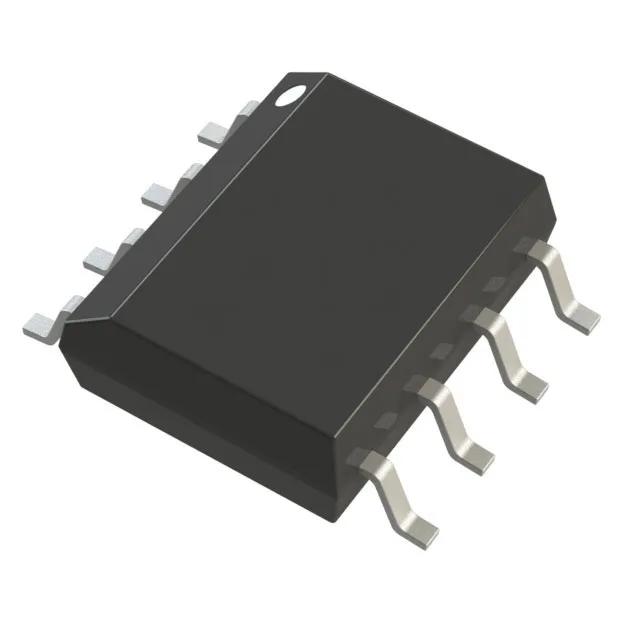
Package and footprint — 8-SOIC
Housed in an 8-pin SOIC (0.154" body width, 3.90mm), surface-mount.
ROHS3 compliant.