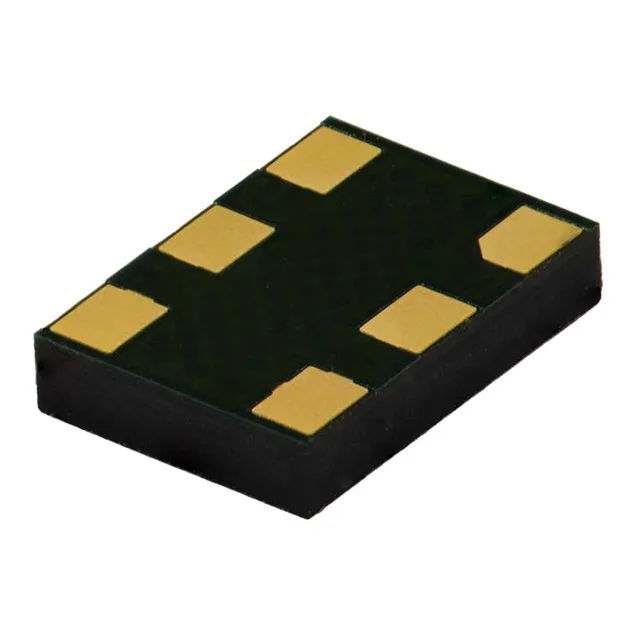
156.25 MHz LVPECL clock — what the ratings mean
The ASVMX-156.250MHZ-3BBA is a standard crystal oscillator (XO) operating at 156.25 MHz with LVPECL output — the differential clock standard found across telecom line cards, networking ASICs, and FPGA development boards that require a clean, current-steering output stage. LVPECL demands a matching 50 Ω transmission line and a DC bias path at the receiving end; if the downstream device expects LVDS or CMOS, an AC-coupling network with a termination divider is required. Supply range is 2.375 V to 3.63 V, drawing up to 120 mA at full output swing — the Enable/Disable pin is the power-management lever: tying it low powers down the oscillator and drops current to the standby level. In a battery-backed or remote unit, that pin is the design decision. A Stratum-3 clock budget typically allows ±4.6 ppm per year aging on top of the initial tolerance, so the 50 ppm stability leaves headroom for long-haul timing chains in telecom infrastructure.
Package, footprint, and thermal profile
The no-lead finish requires a reflow profile that avoids excessive peak temperatures on the crystal resonator inside; refer to the Abracon reflow guidance for the ASVMX series to avoid shocking the resonator assembly. Base resonator is a quartz crystal, which means the part is sensitive to mechanical shock and vibration after reflow — if the end equipment is in a high-vibration environment, consider whether the board mount and potting approach provide sufficient isolation.
Listed as Active on the Abracon lifecycle record — no NRND notice, no EOL date, and no official successor on file.