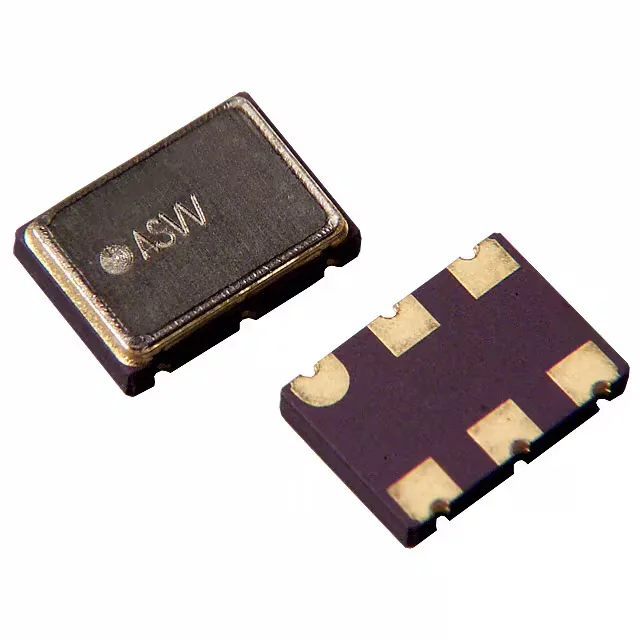
4.096 MHz VCXO — what the frequency and stability mean for timing budgets
The ASVV-4.096MHZ-N152-T: The 4.096 MHz output at ±50ppm frequency stability sets the reference precision for PLL-locked clocks and frequency-synthesis stages — the ±50ppm ceiling encompasses both the initial tolerance and temperature drift across the 0°C~70°C operating window, so the designer budgets the remaining pull range accordingly. A VCXO, unlike a fixed-frequency XO, allows the control voltage pin to trim the output within a defined pull-range window — the ASVV datasheet defines that window; the ±50ppm stability figure tells you how much of the total timing error budget this oscillator consumes before the PLL even attempts correction.
CMOS and TTL dual output on 3.3 V — what it connects to
The 3.3 V supply rail is the standard logic level for modern digital boards — both CMOS and TTL output stages are provided, so the part drives legacy TTL-compatible receivers without a level-translator while also satisfying CMOS input thresholds at 3.3 V VCC. Maximum supply current of 15 mA is modest; the 3.3 V rail can power this directly from the main rail without a dedicated LDO for the oscillator — but confirm the supply noise budget against the VCXO pull-range sensitivity if the oscillator is used as a PLL reference.
6-SMD no-lead footprint — board integration dimensions
Supplied on tape-and-reel (standard) and cut-tape — production volumes roll from the reel, while cut-tape suits prototype hand-assembly or programming. The no-lead (DFN-style) terminations need a reflow profile with a soak window that avoids thermal shock to the crystal resonator inside.
Standby function and commercial temperature grade — operational implications
The standby (power-down) function lets the oscillator disable its output while maintaining the crystal in a powered-biased state — on wake-up the output resumes without the warm-up restart time of a cold-start oscillator, which matters for power-cycling architectures in battery-backed or duty-cycled equipment. Rated 0°C~70°C is the commercial temperature band — appropriate for indoor infrastructure, telecom shelf hardware, and industrial control panels where the ambient stays within a conditioned enclosure; this grade is not qualified for outdoor unmanned or automotive under-hood environments.
Listed as Active in the manufacturer's lifecycle record — no NRND notice, no EOL date, and no official successor on file.