The ASVMPC-33.333MHZ-Z-T is a MEMS-based crystal oscillator (XO) in the ASVMP Pure Silicon series — the resonator is a silicon microstructures, not a traditional AT-cut crystal. MEMS resonators have no mechanical fatigue or drift budget to track over time, so long-term frequency stability is set by the silicon physics rather than a crystal's aging rate. The Enable/Disable pin lets the system gate power — draw drops from 35 mA maximum in the active state to 22 mA when disabled. For a sensor node or instrument that sleeps between measurement cycles, this pin is the hardware control point for the oscillator's contribution to standby current. The 125 °C ceiling is not a typical spec for standard oscillators; it signals this part was designed for environments where most XO candidates are ruled out by temperature derating.
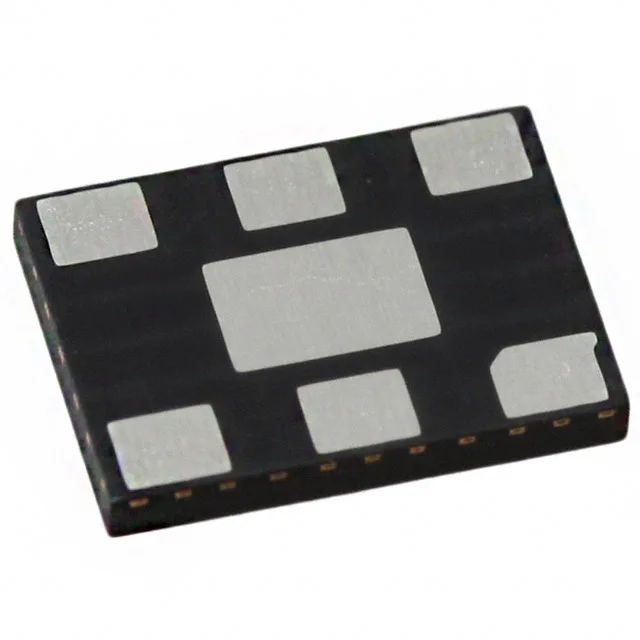
ASVMPC-33.333MHZ-Z-T 33.333 MHz MEMS XO, CMOS, -55 to 125°C
MPNASVMPC-33.333MHZ-Z-T
Active
Abracon LLC ASVMP Pure Silicon XO, 33.333 MHz, CMOS output, 2.25–3.6 V, -55°C to 125°C, Enable/Disable, 6-SMD 7.00 mm × 5.00 mm, MEMS resonator.
$2.1675Ref. price · indicative, final on quote
Independent supplier — new & surplus stockAuthenticity-screened · ESD-safe packingListing updated Aug 2026
Specifications
| Parameter | Value |
|---|---|
| Type | XO (Standard) |
| Series | ASVMP, Pure Silicon™ |
| Mounting | Surface Mount |
| Supply voltage | 2.25V ~ 3.6V |
| Current - supply | 35mA |
| Current - supply (Disable) | 22mA |
| Frequency | 33.333 MHz |
| Operating temperature | -55°C~125°C |
| Size (Dimension) | 0.276\" L x 0.197\" W (7.00mm x 5.00mm) |
| Height - seated | 0.035\" (0.90mm) |
| Output | CMOS |
| Package | Tape & Reel (TR) |
| Function | Enable/Disable |
| Base resonator | MEMS |
| Case | 6-SMD, No Lead Exposed Pad |
Product details
Frequently asked questions
Where can I source ASVMPC-33.333MHZ-Z-T and what is the typical lead time?
The part is listed as Active by Abracon LLC.
What is ASVMPC-33.333MHZ-Z-T used for?
This is a timing reference oscillator in systems that need a precise clock source across a wide temperature range — typical targets are industrial and instrumentation applications, including communication modules and test equipment that run in thermally demanding environments. The 33.333 MHz output is a common rate for serial-data clock multiplication and telecom timing paths.