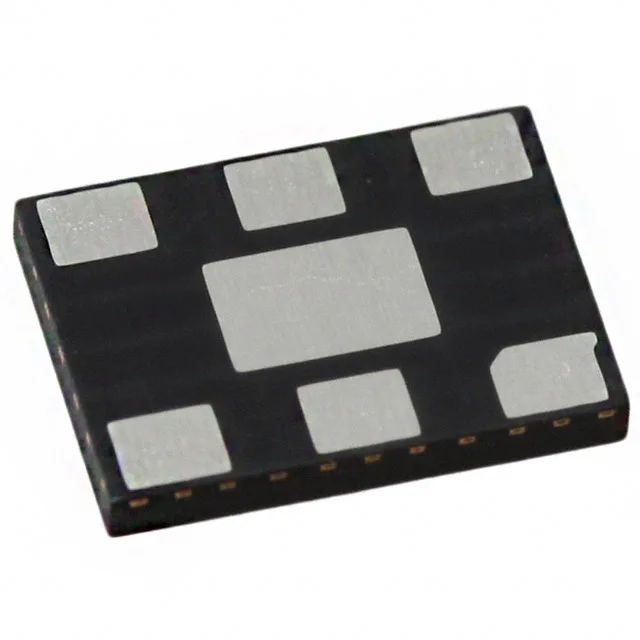
Abracon LLC ASVMPC-16.000MHZ-EC-T — Crystals & Oscillators

ASVMPC-16.000MHZ-EC-T Abracon 16MHz MEMS XO

MPNASVMPC-16.000MHZ-EC-T
Active

Abracon ASVMP Pure Silicon XO, 16 MHz, CMOS output, 2.25–3.6 V supply, 35 mA max, Enable/Disable, 6-SMD exposed pad, -20°C~70°C.

$1.5817Ref. price · indicative, final on quote
Independent supplier — new & surplus stockAuthenticity-screened · ESD-safe packingListing updated Aug 2026

Specifications

ASVMPC-16.000MHZ-EC-T specifications
ParameterValue
TypeXO (Standard)
SeriesASVMP, Pure Silicon™
MountingSurface Mount
Supply voltage2.25V ~ 3.6V
Current - supply35mA
Current - supply (Disable)22mA
Frequency16 MHz
Operating temperature-20°C~70°C
Size (Dimension)0.276\" L x 0.197\" W (7.00mm x 5.00mm)
Height - seated0.035\" (0.90mm)
OutputCMOS
PackageTape & Reel (TR); Cut Tape (CT)
FunctionEnable/Disable
Base resonatorMEMS
Case6-SMD, No Lead Exposed Pad

Product details

MEMS resonator, not quartz

The ASVMPC-16.000MHZ-EC-T is a standard CMOS-output crystal oscillator running at 16 MHz, built on a MEMS (micro-electromechanical systems) resonator rather than a traditional quartz crystal. Abracon calls this the Pure Silicon series — the silicon resonator is etched directly on the die, which gives it better tolerance and temperature stability than a discrete crystal-and-inverter pairing. For timing-critical paths on instrumentation or industrial control boards, that matters. The CMOS output stage drives standard logic inputs directly, no external terminations needed.

Supply rails and current draw

Those numbers are worth flagging if you are power-budgeting a battery-hosted or deeply-sleeping node: the disabled-state draw of 22 mA is not zero, so the Enable/Disable is a power-management feature rather than a hard disconnect. Operating temperature is -20°C to 70°C — commercial grade, not industrial. That rules out engine-bay or outdoor-ambient deployments but is fine for indoor instrumentation, comms equipment, and general-purpose digital boards.

Package and board footprint

The exposed pad under the package is the thermal and ground reference — it should be soldered to the PCB pad, not floating.

Frequently asked questions

What does the Enable/Disable function actually do?

The Enable/Disable pin turns the CMOS output on or off. When disabled, the output goes high-impedance and supply current drops to 22 mA maximum — useful for power-cycling the clock in sleep-mode designs, though it is not a hard shutdown (current draw is still present).

How does a MEMS XO differ from a crystal-and-inverter pair?

A traditional crystal oscillator uses a quartz resonator driven by an external inverter; the MEMS resonator inside this oscillator is integrated on the same silicon die as the drive circuitry. That integration gives tighter initial tolerance and better stability over temperature and mechanical shock compared to a discrete crystal plus oscillator IC, at the cost of a fixed frequency that cannot be trimmed post-manufacture.