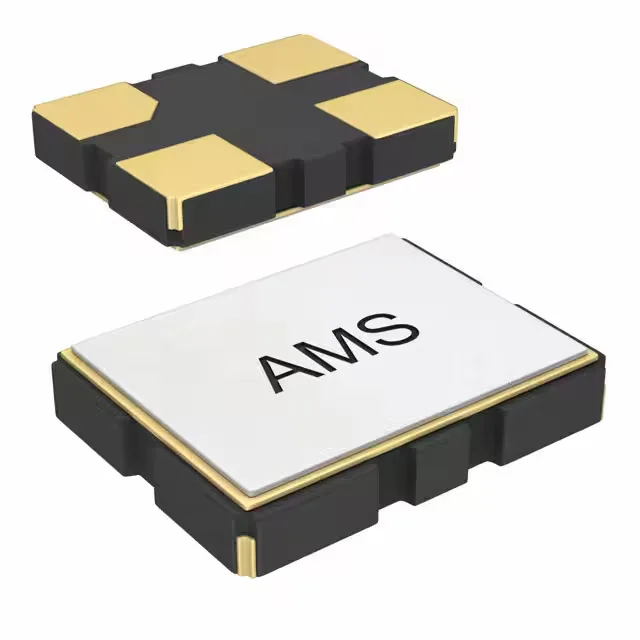
38.4 MHz on 3.3 V — does it fit the clock rail?
The ASE-38.400MHZ-C-T3 is a standard CMOS XO — a Pierce-oscillator core built on a crystal resonator, delivering a 38.4 MHz square-wave output directly into a CMOS logic gate. 3.3 V single-rail operation means it drops into most microcontroller clock inputs and PHY reference clocks without a level-shifter, which is the main reason this part ships in consumer audio codecs, USB peripheral MCUs, and low-speed serializer/deserializer chains that derive their bit rate from a 38.4 MHz reference. ±50 ppm frequency stability across -10°C to 70°C covers the commercial indoor envelope — office equipment, set-top boxes, and industrial panels that don't see direct outdoor thermal cycling. If your serial bus clock tolerance stack is tight (USB FS at 480 MHz divided from 38.4 MHz, for instance), the ±50 ppm budget is the root-cause anchor for any recovered-clock wander analysis.
Disable pin — the quiet mode that matters for battery nodes
The enable/disable function draws 13 mA active and collapses to 10 µA in shutdown. For a sensor mote or a battery-backed RTC auxiliary oscillator that wakes on a timer interrupt, killing the 13 mA between burst cycles can shift the average current from milliwatts to microwatts — the disable pin is the only external control the oscillator exposes. The 4-SMD 3.20 × 2.50 mm footprint with 1.20 mm seated height sits on the same pad pattern as half a dozen competing 3.2 × 2.5 crystal oscillators from other vendors — the ASE part is not pin-unique, so a second-source candidate with matching footprint and electrical limits is worth screening at BOM review.