Why the ESR and ripple current rating matter for this part
The APXG250ARA560MF80G: At 56 µF and 25 V in the NPCAP™-PXG series, this is the part a power-supply designer reaches for on the output side of a synchronous buck or boost converter running at 300–500 kHz. The low ESR keeps the switching artifacts out of the load rail, and the ripple current rating gives headroom above the RMS current the converter actually demands.
Thermal endurance at 105°C
15,000 hours at 105°C is the lifetime rating — polymer capacitors do not dry out the way wet electrolytics do, so the 105°C rating is a real operating temperature rather than a derated figure. The -55°C cold start capability means it handles cold-soak startup in outdoor or vehicle-mounted equipment without the ESR spike that penalizes wet electrolytics at low temperature. The ±20% tolerance is the standard tolerance for aluminum electrolytic capacitors and is acceptable for bulk bypass or input filtering. If the application needs tighter capacitance for time-constant or filter cutoff accuracy, a film or ceramic alternative would be required — this part is listed for general-purpose use, not precision filtering.
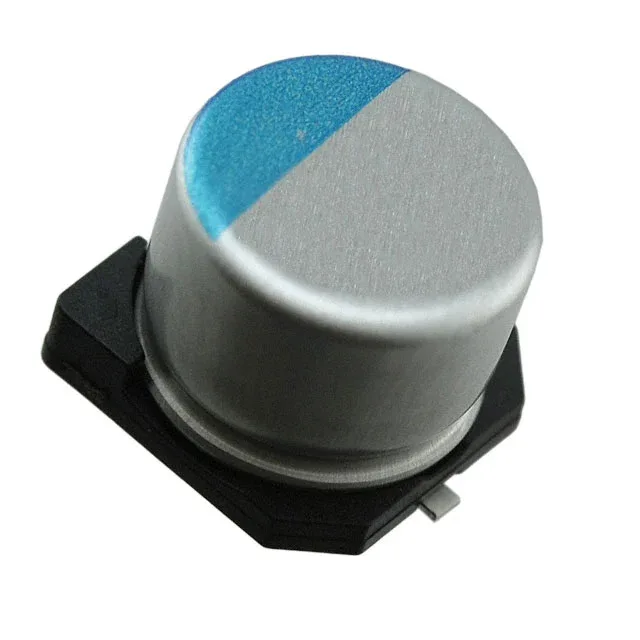
SMD radial can — footprint and board integration
The 6.30 mm diameter body fits the standard 8 mm seated height profile for medium-density SMD assembly. The land pattern is 6.60 mm × 6.60 mm — the board designer needs to confirm the pad geometry matches the reflow profile the assembly house will run, particularly the soak and peak temperature targets for a polymer capacitor versus a pure ceramic or film part. Tape-and-reel packaging is confirmed on the evidence — the part is compatible with standard SMT pick-and-place. Cut tape is also available, which is useful for low-volume prototyping runs where a full reel is not economical.