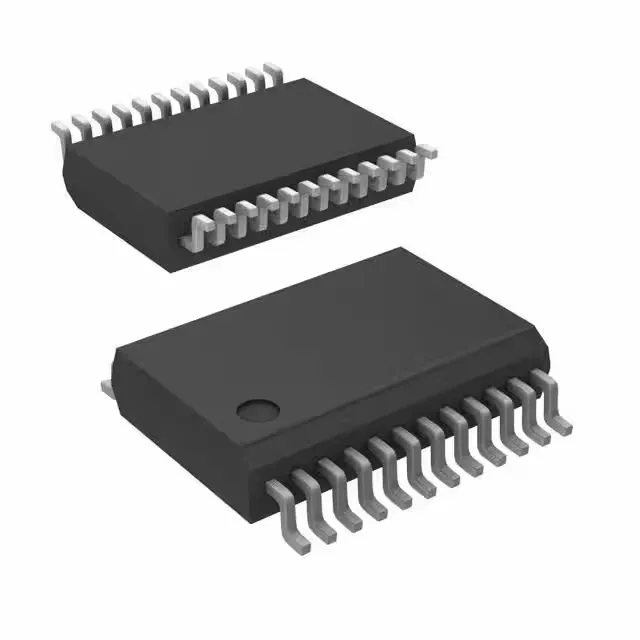
Toshiba Semiconductor and Storage TB6612FNG,C,8,EL
Full Technical Specifications
13 Parameters| Parameter / Attribute | Specification / Value |
|---|---|
| Mounting | Surface Mount |
| Motor type - AC, DC | Brushed DC |
| Voltage - load | 2.5V ~ 13.5V |
| Supply voltage | 2.7V ~ 5.5V |
| Output current | 1A |
| Interface | Parallel |
| Operating temperature | -20°C~85°C(TA) |
| Package | Tape & Reel (TR); Cut Tape (CT) |
| Function | Driver - Fully Integrated, Control and Power Stage |
| Technology | Power MOSFET |
| Applications | General Purpose |
| Case | 24-LSSOP (0.220\", 5.60mm Width) |
| Output configuration | Half Bridge (4) |
Need Stock or a Drop-in Second-Source for TB6612FNG,C,8,EL?
Package: MultiWatt-15 / module · Pin-compatible replacements with immediate Shenzhen spot stock
The L298N is the motor driver of the red breakout module that has fronted a million robots and CNC builds - a dual full-bridge in MultiWatt-15 with 2A-per-channel capability and a price that made it the default. Its reputation runs ahead of its datasheet in one direction only: the Darlington output stage drops 1.4V to 3V depending on current, which on a 6V robot supply is a third of the battery spent as heat. The bare chip also needs external flyback diodes that the modules provide and small repairs often omit. Two honest conversations belong on this page: L293D is the smaller cousin with built-in diodes, and the modern MOSFET drivers (TB6612FNG and the DRV row) are the reason new designs stopped choosing this part.
Verified Pin-Compatible Replacements (2 verified alternatives)
The Smaller Cousin with Built-in Diodes
Shenzhen Spot Stock (24-48h Dispatch)
Quadruple half-bridge (two full bridges) rated about 600mA per channel continuous with 1.2A non-repetitive peaks against the L298N 2A class - and the D suffix folds the flyback diodes inside.
4.5V to 36V; same Darlington-era voltage drop, so poor on 6V motor rails.
The MOSFET Generation - The Honest Upgrade
Shenzhen Spot Stock (24-48h Dispatch)
MOSFET output stage dropping about 0.5V against the L298Ns 1.4-3V: 1.2A continuous / 3.2A peak per channel, natively 3.3V-logic compatible, roughly 90 percent efficient.
Motor rail ceiling about 13.5V - the trade against the L298Ns 35-46V class. Battery robots win; industrial rails stay with the old part.
Buyer & Quality Checklist for Sourcing Alternatives
- The Darlington drop is the design number: about 1.4V minimum, up to 3V+ per bridge at current. On a 6V supply that is a third of the energy as heat - check the numbers against the battery before blaming the motors.
- The bare L298N needs external flyback diodes; the common red modules include them. A repair that transplanted just the chip onto a module board and skipped the diode check reintroduces the failure that killed the first one.
- Sense resistors (the two low-side pins) are how current feedback works on this part: designs that used them lose that behavior if the substitute module grounds those pins directly.
- Thermal path is half the 2A rating: MultiWatt-15 on a heatsink with compound; module boards with tiny fins are honest for about an amp of continuous duty.
- Enable pins are also the PWM inputs on the modules: two jumpers removed equals two PWM channels - repairs that restore the jumpers by habit take the speed control away.
- For new designs under about 13V, compare a MOSFET driver (TB6612FNG class) before defaulting to the Darlington part: the efficiency difference is not subtle, it is the battery life.
Frequently Asked Technical Questions
Q: What is the difference between L298N and L293D?
A: Current and diodes: L298N passes about 2A per channel and needs external flyback diodes, L293D is about 600mA per channel with the diodes built in. Same Darlington-era voltage drop; different sockets. The L298N replaces the L293D upward, not the reverse.
Q: Why does my L298N get so hot?
A: By design: the Darlington output drops 1.4V to over 3V at current, and that difference is heat. Check the heatsink and compound, and for battery designs under 13V consider a MOSFET driver - the efficiency gap is the whole story.
Q: Is TB6612FNG a replacement for L298N?
A: As a design, yes - the modern MOSFET alternative for anything under about 13.5V, far cooler and 3.3V-friendly. As a board, no: different package and pinout (own module). Above 13.5V the L298N class remains the available choice.