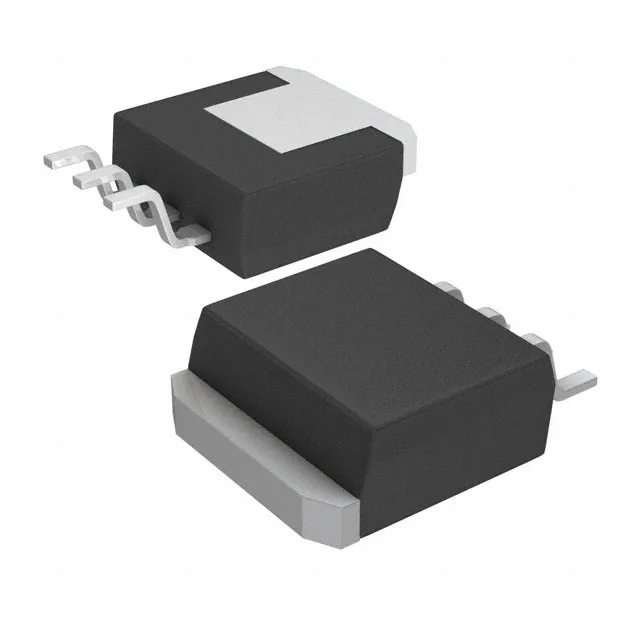
10 V fixed output, 1.5 A continuous — the 78 dB PSRR matters here
The UA7810CKTTR is a fixed 10 V positive LDO regulator from Texas Instruments, rated for 1.5 A continuous output. It belongs to the classic 78xx family but in a surface-mount D²Pak (TO-263) package — the same die as the through-hole version, just re-packaged for automated assembly. The 78 dB PSRR at 120 Hz means this part rejects full-wave-rectified ripple (100/120 Hz) by a factor of roughly 8000:1 — critical when the input comes from a bulk capacitor after a bridge rectifier. If your rail has 1 Vpp ripple at 120 Hz, the output sees about 125 µVpp of that ripple. That's the difference between a clean analog supply and one that injects hum into a preamp or ADC reference. Protection features include over-current, over-temperature, reverse polarity, and short-circuit — the output folds back under fault, and the die thermal-shutdown kicks in before the plastic package reaches its glass-transition temperature. Reverse polarity protection means a swapped input rail won't instantly kill the regulator (though the downstream load may still suffer).
Dropout headroom and thermal design — the 2 V at 1 A rule
Maximum dropout voltage is 2 V at 1 A load. At lighter loads the dropout drops, but design the minimum input voltage around this worst-case figure — otherwise the output sags below 10 V under transient load. The DDPAK/TO-263-3 package has an exposed metal tab on the bottom (the D²Pak paddle). That tab is the output (Vout) and also the main thermal path. Solder it to a copper plane on the PCB — the datasheet recommends at least 1 square inch of 2-oz copper for 1.5 A at 25°C ambient. Without that plane, the junction-to-ambient thermal resistance climbs above 60°C/W, and the die hits thermal shutdown at much lower current. Operating temperature range is 0°C to 125°C junction — this is a commercial-grade part. Not rated for -40°C cold start, so if the board sees freezing temperatures at power-up, look at the industrial-grade UA78xx variants instead.